Attachment parenting, or AP, is an approach to child-rearing intended to forge strong, secure attachments between parents and children. Inspired by the work of psychologist John Bowlby, supporters argue that babies need close, physical contact from their primary caregivers, and infants signal for this in a variety of ways, including vocalizations, reaching, and smiling. When parents respond appropriately to these signals — and generally provide children with high levels of contact — babies are more likely to develop secure attachment relationships. More specifically, proponents may claim that certain caregiving practices (such as breastfeeding, baby-wearing, or co-sleeping) contribute to secure attachment.
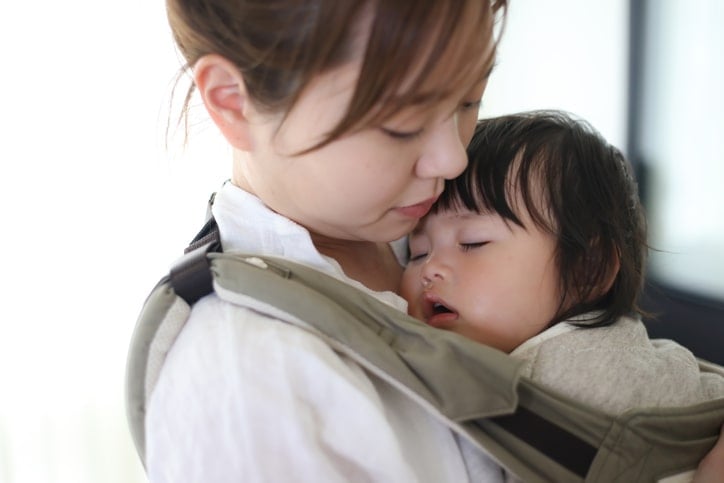
For many parents, the approach feels intuitive, and anthropological research supports the idea that a tactile, high contact, “proximate” style of infant care has deep roots in our evolutionary past (Konner 2005).
But does attachment parenting contribute to better child outcomes? Not surprisingly, it depends on what definition you use.
If we use the definition proposed by William Sears and Martha Sears, then “attachment parenting” is essentially another term for “sensitive, responsive parenting.”
The Searses suggest a list of principles and practices that go along with AP (see below), but they have stressed that it isn’t necessary for parents to follow all of them. The practices are intended to help caregivers achieve the goals of being sensitive and responsive to children. Parents can experiment, and see what works. A similar approach has been taken by Attachment Parenting International.
This is the definition I will address here, and, as we will see, there is a large body of research indicating that sensitive, responsive parenting does benefit children.
Among other things, it appears to protect children from the effects of toxic stress — helping children develop resilience in the face of adversity. It may also reduce a child’s risk of developing behavior problems, and promote the development of moral reasoning (see below).
But if we focus on specific practices, the evidence is mixed.
In general, the practices recommended by the Sears are beneficial. But not every practice works for everyone, and not every claim (made by various advocates) has been supported. For instance, baby-wearing has benefits, but it doesn’t appear to stop colicky babies from crying excessively. And while breastfeeding stimulates the release of oxytocin in mothers — enhancing feelings of sociability and lowering anxiety levels (Uvnäs Moberg et al 2020) — the accumulated data don’t support the idea that breastfed infants are more likely to be securely-attached (Linde et al 2020).
So evidence in favor of sensitive, responsive caregiving doesn’t tell us that every practice associated with attachment parenting is superior (or the right choice for your family). If we want to know the effects of a specific practice, we need controlled studies that target that particular practice.
What about other definitions of attachment parenting?
It’s important to acknowledge that other conceptions of attachment parenting are not necessarily consistent with what we know about effective care-giving behavior. They also may be rooted in pseudo-science beliefs about the biology of motherhood.
For example, according to one writer, attachment parenting means responding immediately to a crying infant by offering a breast; “waking every hour” at night to feed; or rushing in with pre-emptive attempts to soothe, so that parents fail to find out what their babies actually need (e.g., Jenner 2014).
This isn’t the sort of behavior that has been linked with secure attachments, and it’s inconsistent with what researchers typically mean by “sensitive, responsive parenting.”
To fit the typical criteria for “sensitive and responsive,” a parent needs to accurately interpret the baby’s signals, and provide an appropriate response. That’s not what the “waking every hour” definition describes. And all that rushing to intervene? It can be counter-productive.
For instance, babies often make noises during brief moments of waking during the night. They may also vocalize when they are sleeping. If parents misinterpret these sounds and rush to feed a baby, they are needlessly depriving everyone of sleep — and perhaps teaching the baby to awaken frequently at night!
So if we define “attachment parenting” as a frenetic attempt to deliver fast responses (including unnecessary intrusions that prevent babies from developing patterns of consolidated, nighttime sleep), we have little reason to think this would benefit families.
The same may be said for definitions that require parents (and mothers in particular) to adopt an extreme, child-centered lifestyle — the sort that leaves caregivers feeling overwhelmed, unsupported, and socially isolated from other adults.
Not only is this bad for a parent’s mental health, and it also appears to be based on a misunderstanding — the false premised that human mothers evolved to be the exclusive providers of intensive parental care.
The implication is mothers are designed to devote all their energies to child-rearing, and thrive by doing so. It’s the “ancestral way.” If you can’t manage it — or don’t enjoy it — something is wrong with you. But anthropological research refutes these notions.
Ethnographic evidence against the idea that mothers are exclusively focused on raising children (and that they are supposed to do this on their own)
If there are any peoples whose life-ways most closely resemble those of our ancestors, it is the world’s last remaining hunter-gatherers. Yet hunter-gatherer mothers don’t devote all their energies to child-rearing.
Sure, they have child care duties, but they have other work as well, and, as I explain elsewhere, they raise their children with the help of relatives and friends.
In some of these societies, as much of half the daytime care of infants is contributed by other relatives — like fathers, siblings, grandmothers (Chaudhary et al 2023; Konner 2010; Hrdy 2009; Hrdy 1999).
Even in societies where hunter-gatherer mothers provide the majority of infant care, parenting bears little resemblance to the fairy tale scenario of “total motherhood.” When coping with a crying infant, mothers nearly always receive some sort of help — either with soothing the infant, or with some other aspect of infant care (Kruger and Konner 2010).
Then there is the unrealistic expectation that parents can simultaneously maximize physical contact and stimulating, face-to-face, verbal communication.
Secure, loving attachments are fostered by physical closeness and responsiveness. They can also be enhanced by verbal responsiveness and sensitive, face-to-face communication. For Western parents attempting to practice attachment parenting, it might seem natural to do it all — to carry and hold your baby throughout the day; to make frequent eye contact; to smile and engage your baby in stimulating conversation. After all, isn’t this how babies are raised in traditional societies? Societies where babies are held close?
Not necessarily. Cross-cultural research confirms that many traditional, non-Western societies emphasize “proximal” infant care — high levels of physical contact and holding. This contrasts with a more “distal” approach, where babies experience less body contact.
In proximal care societies, do babies get a combination of physical contact and “face time”? Yes! But there seems to be a trade-off. Parents who practice proximal care tend to spend less time engaging with their babies face-to-face.
It makes sense, if you think about it. If your baby is strapped to your body, that’s not conducive to eye contact, and you might learn to detect and address your baby’s needs without talking. Remember, too, that these parents are carrying babies while they do their work. As parents everywhere know, that’s not easy to do if you are simultaneously talking to a young child.
Moreover, there are traditional farming cultures where the goal is to socialize children to be emotionally calm, and to focus on the needs of the collective. As a result, stimulating, one-on-one conversation is considered undesirable (Keller 2022; Mesman et al 2018; Keller 2018; Lancy 2008).
None of this means that an intensive, combination approach to infant care (showing both high levels of physical contact and high levels of responsive, face-to-face communication) is lacking in benefits. On the contrary, it’s probably helpful to children living in Western societies where early verbal skills and individualistic self-expression contribute to long-term success.
But we should realize that this is a balancing act.
I have seen parents despair that they’ve “failed” their babies because they didn’t live up to their own expectations of combining proximal care with frequent, stimulating bouts of face-to-face communication.
In reality? These parents are holding themselves to unrealistic standards, and it causes needless distress.
So it’s easy to find problems with “attachment parenting” if we define it differently than the Sears have.
In the remainder of this article, I will ignore alternative definitions, and focus on reviewing the evidence favoring physical closeness, sensitivity, and responsiveness in parents. For information about books, websites, and organizations that offer support to parents committed to these principles, click here.
Attachment parenting in its original formulation: What does it look like?
According to William and Martha Sears, attachment parenting is associated with a range of practices and approaches, including
- the frequent holding and carrying of infants (“baby-wearing”),
- breastfeeding,
- the avoidance of strictly-timed, adult-imposed feeding schedules,
- nurturing touch (including skin-to-skin “kangaroo care” for infants),
- being responsive to a baby’s cries,
- being sensitive and responsive to a child’s emotions (e.g., by helping him or her cope with nighttime fears), and
- co-sleeping, or “bedding close to baby” (e.g., infants sleeping in the same room with caregivers).
In addition, care-givers may attempt to handle misbehavior by using the techniques of “positive discipline.” These include distracting or redirecting very young children; providing patient, timely reminders; emotion-coaching; reasoning; inducing empathy; and using language that motivates kids to bounce back from mistakes.
But William and Martha Sears, who coined the term “attachment parenting”–note that there is no checklist of specific practices that parents must follow (Sears and Sears 2001). What’s important, argues these authors, is that parents strive to be sensitive and responsive — so that they can learn how to meet their children’s needs in an affectionate, effective way.
This is not the same as being overly-protective. By definition, securely-attached kids are not overly-clingy or helpless. They are the kids who feel confident to explore the world on their own. They can do this because they trust that their parents will be there for them (Mercer 2006).
And if we take the Sears’s definition to heart — if attachment parenting is synonymous with “sensitive, responsive parenting” — then it follows that attachment parenting will look different from one family to the next.
In fact, attachment parenting may take different forms within the same family. Parents adapt their approaches to suit the individual needs of each child. For example, some babies crave lots of touch and social stimulation, while others may find this to be overwhelming. Being sensitive and responsive means attending to your child’s cues, and adjusting your approach accordingly.
What’s the scientific case for attachment parenting?
Advocates for the “sensitive, responsive” form of attachment parenting make two major claims:
1. sensitive, responsive parenting leads kids to form secure attachments, and
2. securely-attached kids are healthier and happier.
Some writers have attempted to support these claims with studies of extremely deprived infants (both human and nonhuman). They point to situations where infants haven’t gotten the physical affection and personal attention they need for normal, healthy development.
For instance, research demonstrates that kids who are terribly neglected and abused—like children raised in the infamous Romanian orphanages—suffer neurocognitive impairment and socio-emotional problems (Chugani et al 2001).
There’s no doubt whatsoever that conditions like these are terrible for children. There’s no doubt that kids would be better off if they were raised according to the principles of attachment parenting. But does this mean that attachment parenting practices are the only way to raise a healthy, thriving child? Or that other approaches (such as contemporary, Western, “mainstream” parenting) put kids at risk in the same way that cold, institutionalized child-rearing methods do? Not at all.
So while such research confirms that chronic stress and trauma are bad for the brain, it’s a stretch to cite these studies as proof that attachment parenting is superior to “mainstream” Western parenting.
As a result, some critics have argued that the attachment parenting movement is based on overblown or fallacious claims (Hayes 1998; Warner 2006). This is unfortunate, because there is good evidence supporting other claims.
First, consider the claim that sensitive, responsive parenting leads to secure bonds. Several features of attachment parenting have been linked with attachment security:
- Insight into a child’s mental and emotional states. A study of mothers and their 12 month old infants reports that mothers who showed greater insight about their babies’ psychological experiences were rated as more sensitive and were more likely to have securely-attached infants (Koren-Karie 2002). Another study reports that mothers who showed a more accurate understanding of their infants’ mental states at 6 months were more likely to have securely-attached infants at 12 months (Meins et al 2001). Read more about these links here.
- Maternal sensitivity to an infant’s distress, especially for babies who are prone to bad moods. Studies of families in the United States suggest that mothers who show greater sensitivity to their infants’ distress at 6 months are more likely to have securely attached children later on. However, the most recent study found this effect was only present among babies who experienced frequent negative moods (McElwain and Booth-Laforce 2006; Leerkes and Zhou 2018).
- Baby-wearing. Multiple studies, including experimental ones, have reported links between baby-wearing and attachment security (Norholt 2020). For example, in one case, researchers randomly assigned teenage mothers to carry their newborn infants in sling for at least an hour each day, for a period of 3 months. When the babies were 7 months old, the researchers evaluated their attachment security, and compared their outcomes with those of babies in a control group. The more time a baby had spent being carried, the more likely it was to be securely attached (Williams and Turner 2020). A previous experiment on low-income mothers reported similar results (Anisfeld et al 1990).
- Emotional availability. Research suggests a link between secure attachment and emotional availability—being open to discuss emotions, and being ready to respond sensitively and appropriately to the emotions of others (Easterbrooks et al 2000). For instance, in studies conducted in Israel, South Africa, the Netherlands, and the United States, children were more likely to have secure attachments if their mothers scored higher on tests of emotional availabilty (Ziv et al 2000; Tomlinson et al 2005; van Bakel et al 2002; Kim et al 2017).
Then there’s the question of child outcomes. Do secure attachments and sensitive, responsive parenting lead to happier, healthier kids? Let’s take a look at some specific ways that attachment parenting may benefit children.
Promoting independence
As noted above, securely-attached children are more likely to explore on their own (Mercer 2006). In addition, infants may be less likely to develop fearful tendencies if their mothers show higher levels of emotional sensitivity and responsiveness during parent-child interactions (Gartstein et al 2017).
Fostering better emotional regulation
When researchers tracked 45 mother-child pairs from infancy to age 7, they found that infants who were securely-attached during infancy were more likely to demonstrate emotional availability at age 7 (Easterbrooks et al 2000). Why? Secure attachments may be intrinsically helpful, but it’s also likely that specific parenting characteristics play a role.
For instance, in a study of American children (aged 9-11 years), researchers found that kids with secure attachment relationships — and greater levels of maternal support — showed “higher levels of positive mood, more constructive coping, and better regulation of emotion in the classroom.” (Kerns et al 2007).
Another study found that parents who were responsive to their children’s distress had kids who were better at regulating their own, negative emotions. In addition, children showed an improved ability to regulate their positive emotions if their mothers showed higher levels of warmth (Davidov and Grusec 1996).
Helping children cope with stress
As I note in this article about stress in babies, there is a lot we can do to keep babies calm and happy. It’s true for older children too. But do these things make a big difference?
I think they so, particularly for children who are very sensitive, emotionally reactive, anxious, or exposed to high levels of environmental stress.
For example, there is compelling evidence that skin-to-skin contact helps babies develop healthy stress response systems.
In one study comparing two groups of preterm infants, researchers found that children who’d received skin-to-skin contact in the first weeks postpartum had developed, by age 10, more healthy stress response systems, improved sleep patterns, and better cognitive control (Feldman et al 2014).
In another study, newborns at high risk for developing abnormal stress responses showed no evidence of such problems at 7 months — not if their mothers reported giving their babies lots of caresses (Sharp et al 2012).
In addition, studies link co-sleeping with reduced stress reactivity.
- In a study of Dutch families, infants who slept near their parents at night experienced lower spikes in the stress hormone cortisol when they were subjected to psychologically distressing situations during the daytime (Beijers et al 2013).
- An experiment testing newborns’ responses to bathing found that, compared to co-sleepers, babies who slept alone experienced sharper spikes in cortisol levels (Tollenaar et al 2012).
- And researchers have reported that British children (aged 3-8) who slept in their parents’ rooms showed lower daily levels of the stress hormone cortisol (Waynforth 2007).
There is also evidence for the stress-busting power of parental warmth.
As I note in this article, people who grow up in poverty experience high levels of stress, and may therefore be at high risk of developing stress-related diseases, atherosclerosis, autoimmune disorders, and cancer.
But studies suggest that kids who have highly nurturing parents are protected from these risks. And the advantage may begin early in life: One study reports that infants of more sensitive mothers had lower baseline levels of the stress hormone cortisol (Blair et al 2006).
Other research suggests that babies with “difficult” temperaments may turn into well-adjusted kids if they receive warm, sensitive parenting (Stright et al 2008; Pluess and Belsky 2010).
And researchers have found evidence that warm, sensitive parenting protects young children from brain-shrinking stress.
Children exposed to early life stress are at high risk for reduced growth in the hippocampus, a brain structure that plays a key role in spatial learning, memory consolidation, stress reactivity, and the processing of emotion. Is it inevitable? It doesn’t appear to be. In one study, kids from such backgrounds beat the odds — if they had parents who showed high levels of warmth and emotional support (Luby et al 2013).
Finally, there is reason to think that positive discipline may help kids bounce back from stress.
A study of kids living in highly-stressed urban settings found that parents who identified themselves as practitioners of positive discipline were more likely to have children who were stress-resilient (Wyman et al 1991).
Fewer behavior problems?
Observational studies show that securely-attached children are less likely to develop behavior problems (Madigan et al 2016; Dagan et al 2021). Likewise, observational research indicates that children have better behavioral outcomes when they receive sensitive, responsive parenting.
For instance, a longitudinal study tracking the development of 544 babies found that children with more sensitive mothers were less likely to experience executive function problems (including problems with attention, focus, and impulse control) when they were four years old (Kok et al 2013).
These links are suggestive, but not conclusive. Some children suffer from conditions that put them at higher risk for both behavior problems and difficulties forming attachment relationships. And maternal sensitivity is partly influenced by genes — genes mothers share with their children (Cents et al 2014).What if these “maternal sensitivity” genes have the additional, independent effect of making it easier for children to develop strong executive function skills? We can’t jump to conclusions about causation.
But controlled experiments help clarify matters, and support the idea that sensitive, responsive parenting can have a direct effect on behavior problems.
Some examples:
- One experimental study reports that children living in stressed families (characterized by marital conflict and frequent daily hassles) showed fewer overactive problem behaviors if their parents had been trained in positive parenting and sensitive discipline techniques (van Zeijl et al 2006).
- Another controlled study reported a “strong decrease in child conduct problems” after parents were coached in positive parenting tactics (Stattin et al 2015).
- A study of foster children found these kids developed better cognitive flexibility and perspective-taking skills if their caregivers had been trained to “follow the child’s lead” by delivering sensitive, responsive, nurturing care (Lewis-Morrarty 2013).
- And when researchers taught parents how to improve their emotional coaching skills, kids experienced fewer behavior problems at school (Havighurst et al 2013).
Cognitive advantages during early childhood
You might have heard that breastfeeding can boost a child’s IQ — if, like 90% of the population, the child carries the FADS2 gene (Caspi et al 2007). Is this really a thing?
Maybe, but the research is still murky. One possibility is that breastfeeding is really just a marker of other parental behaviors and favorable environmental factors. For instance, breast-feeding mothers tend to be better educated and more affluent. Another possibility is that the benefits of breastfeeding depend on the precise content of breast milk — that only milk with higher levels of DHA fatty acid (docosahexaenoic acid) confers special effects on cognitive ability (Bernard et al 2017; Hartwig et al 2019).
What’s more compelling is the experimental evidence concerning parental sensitivity and responsiveness.
When reseachers have reviewed more than one hundred randomized, controlled trials, they’ve found a general trend: Young children tend to develop stronger cognitive skills after their parents receive training in sensitive, responsive caregiving techniques (Jeong et al 2021; Prime et al 2023).
Possible links with moral development
Do sensitivity and responsiveness promote cooperation and moral reasoning? There’s reason to think so.
For instance, in studies tracking young children over a period of years, researchers have found that early, high levels of maternal sensitivity and responsiveness tend to predict the development of conscience and cooperativeness in young children (Kochanska and Murray 2000; Kochanska et al 2005). In addition, researchers have reported links between maternal responsiveness and children’s empathy toward others (Davidov and Grusec 1996).
Is it the parenting that really matters in these cases? Or are the links simply a reflection of something else — like a shared genetic tendency to be sensitive and cooperative?
As with all developmental phenomenon, a child’s moral reasoning is affected by an interaction of genetic and environmental influences. But research supports our intuitions on this point: Kids are affected by our behavior, and benefit when we tailor our responses to fit their personalities.
For example, in a study tracking children from the age of two, researchers noticed that sensitive mothers used different tactics depending on their children’s temperaments, and these adjustments predicted higher levels of moral reasoning at age five.
In particular, children with exuberant, outgoing temperaments turned out better if their mothers responded to toddler misbehavior by using redirection and distraction. These kids also responded well to gentle (but firm) prohibitions about what they shouldn’t do. Reasoning with them was less effective. By contrast, the use of commands was unhelpful for children with fearful or inhibited temperaments. They responded better to reasoning (Augustine and Stifter 2015).
Results like these underscore why it’s counter-productive to define attachment parenting as a set of required practices.
In its original formulation, “attachment parenting” is another name for being sensitive and responsive. By definition, that means responding to each child on a case-by-case, individual basis. A practice that seems to work well with some children might be unsuitable for others.
Additional, unproven claims and unanswered questions
Baby-wearing and excessive crying (or colic)
As noted above, baby-wearing may be associated with higher rates of secure attachment. It also may help prevent plagiocephaly, the flattening of the back of the head caused by leaving babies on their backs for extended periods (Littlefield 2003). And recent research suggests we can soothe a crying baby if we hold the infant while taking a brisk walk (read more about it here).
But does baby-wearing reduce crying in babies with colic — babies who cry excessively and without any clear cause?
Intuitively, it seems that it might. However, with the exception of one study conducted in 1986 (Hunziger and Barr 1986), there isn’t much scientific evidence to support the idea. For example, a 1995 study reports that “supplemental carrying” of infants had little effect on crying rates (St James-Roberts et al 1995). Possibly, results depend on the temperament of the individual infant. For an overview of research about crying, see this Parenting Science guide.
“Mind-mindedness”… a crucial factor?
“Mind-minded” parents treat their children — no matter how young — as individuals with minds, feelings, thoughts, and beliefs of their own.
Researchers have shown that mind-minded parenting is linked with with the development of stronger empathy and perspective-taking skills in children, as well as better self-regulation and a more highly developmed conscience (Nikolić et al 2022; Bendel-Stenzel et al 2024; Goffin et al 2020).
It’s also linked with more secure attachment relationships. In one longitudinal study, mind-minded parenting at 6 months was correlated with more secure attachments at 12 months. Indeed, mind-minded parenting was a better predictor of secure attachment than were any other variables, including “responsive, sensitive parenting” (Meins et al 2001). In subsequent research, investigators continue to report that early mind-mindedness is a precursor to secure attachment (Zeegers et al 2017; Miller et al 2019).
This makes me wonder. Is mind-mindedness the true foundation of attachment parenting? For more information, check out this article.
References: Attachment parenting
Anisfeld E, Casper V, Nozyce M, and Cunningham N. 1990. Does infant carrying promote attachment? An experimental study of the effects of increased physical contact on the development of attachment. Child Dev. 61(5):1617-27.
Augustine ME and Stifter CA. 2015. Temperament, Parenting, and Moral Development: Specificity of Behavior and Context. Soc Dev. 24(2):285-303.
Beebe B and Steele M. 2013. How does microanalysis of mother-infant communication inform maternal sensitivity and infant attachment? Attach Hum Dev. 15(5-6):583-602.
Beijers R, Riksen-Walraven JM, and de Weerth C. 2012. Cortisol regulation in 12-month-old human infants: associations with the infants’ early history of breastfeeding and co-sleeping. Stress. 16(3):267-77.
Bendel-Stenzel LC, An D, and Kochanska G. 2024. Elucidating mechanisms linking mothers’ and fathers’ mind-mindedness in infancy with children’s self-regulation at early preschool age. J Exp Child Psychol. 238:105782.
Bener A, Ehlayel MS, Alsowaidi S, and Sabbah A. 2007. Role of breast feeding in primary prevention of asthma and allergic diseases in a traditional society. Eur Ann Allergy Clin Immunol. 39(10):337-43.
Bernard JY, Armand M, Peyre H, Garcia C, Forhan A, De Agostini M, Charles MA, Heude B; EDEN Mother-Child Cohort Study Group (Etude des Déterminants pré- et postnatals précoces du développement et de la santé de l’Enfant). 2017. Breastfeeding, Polyunsaturated Fatty Acid Levels in Colostrum and Child Intelligence Quotient at Age 5-6 Years. J Pediatr. 183:43-50.e3.
Blair C, Granger D, Willoughby M, and Kivlighan K. 2006. Maternal sensitivity is related to hypothalamic-pituitary-adrenal axis stress reactivity and regulation in response to emotion challenge in 6-month-old infants. Ann N Y Acad Sci. 1094:263-7.
Caspi A, Williams B, Kim-Cohen J, Craig IW, Milne BJ, Poulton R, Schalkwyk LC, Taylor A, Werts H, and Moffitt TE. 2007. Moderation of breastfeeding effects on the IQ by genetic variation in fatty acid metabolism. Proceedings of the National Academy of Sciences. 104(47):18860-5. Epub 2007 Nov 5.
Cents RA, Kok R, Tiemeier H, Lucassen N, Székely E, Bakermans-Kranenburg MJ, Hofman A, Jaddoe VW, van IJzendoorn MH, Verhulst FC, Lambregtse-van den Berg MP. 2014. Variations in maternal 5-HTTLPR affect observed sensitive parenting. J Child Psychol Psychiatry. 55(9):1025-32.
Chaudhary N, Salali GD, Swanepoel A. Sensitive responsiveness and multiple caregiving networks among Mbendjele BaYaka hunter-gatherers: Potential implications for psychological development and well-being. Dev Psychol. 2023 Nov 13. doi: 10.1037/dev0001601. Epub ahead of print. PMID: 37956035.
Chugani HT, Behen ME, Muzik O, Juhász C, Nagy F, and Chugani DC. 2001. Local brain functional activity following early deprivation: a study of postinstitutionalized Romanian orphans. Neuroimage. 14(6):1290-301.
Crandell LE and Hobson RP. 1999. Individual differences in young children’s IQ: a social-developmental perspective. J Child Psychol Psychiatry. 40(3):455-64.
Dagan O, Schuengel C, Verhage ML, van IJzendoorn MH, Sagi-Schwartz A, Madigan S, Duschinsky R, Roisman GI, Bernard K, Bakermans-Kranenburg M, Bureau JF, Volling BL, Wong MS, Colonnesi C, Brown GL, Eiden RD, Fearon RMP, Oosterman M, Aviezer O, Cummings EM; Collaboration on Attachment to Multiple Parents and Outcomes Synthesis. 2021. Configurations of mother-child and father-child attachment as predictors of internalizing and externalizing behavioral problems: An individual participant data (IPD) meta-analysis. New Dir Child Adolesc Dev 2021(180):67-94.
Davidov M and Grusec JE. 2006. Untangling the links of parental responsiveness to distress and warmth to child outcomes. Child Dev. 77(1):44-58.
Easterbrooks MA, Biesecker G, and Lyons-Ruth K. 2000. Infancy predictors of emotional availability in middle childhood: the roles of attachment security and maternal depressive symptomatology. Attach Hum Dev. 2(2):170-87.
Feldman R, Rosenthal Z, Eidelman AI. 2014. Maternal-preterm skin-to-skin contact enhances child physiologic organization and cognitive control across the first 10 years of life. Biol Psychiatry. 75(1):56-64.
Fuertes M, Santos PL, Beeghly M, and Tronick E. 2006. More than maternal sensitivity shapes attachment: infant coping and temperament. Ann N Y Acad Sci. 1094:292-6.
Gartstein MA, Hancock GR, Iverson SL. 2018. Positive Affectivity and Fear Trajectories in Infancy: Contributions of Mother-Child Interaction Factors. Child Dev. 89(5):1519-1534.
Goffin KC, Kochanska G, Yoon JE. 2020. Children’s theory of mind as a mechanism linking parents’ mind-mindedness in infancy with children’s conscience. J Exp Child Psychol. 193:104784.
Hartwig FP, Davies NM, Horta BL, Ahluwalia TS, Bisgaard H, Bønnelykke K, Caspi A, Moffitt TE, Poulton R, Sajjad A, Tiemeier HW, Dalmau-Bueno A, Guxens M, Bustamante M, Santa-Marina L, Parker N, Paus T, Pausova Z, Lauritzen L, Schnurr TM, Michaelsen KF, Hansen T, Oddy W, Pennell CE, Warrington NM, Davey Smith G, Victora CG. 2019. Effect modification of FADS2 polymorphisms on the association between breastfeeding and intelligence: results from a collaborative meta-analysis. Int J Epidemiol. 48(1):45-57.
Havighurst SS, Wilson KR, Harley AE, Kehoe C, Efron D, Prior MR. 2013. “Tuning into Kids”: reducing young children’s behavior problems using an emotion coaching parenting program. Child Psychiatry Hum Dev. 44(2):247-64.
Hays, Sharon (1998). The Fallacious Assumptions and Unrealistic Prescriptions of Attachment Theory: A Comment on “Parents’ Socioemotional Investment in Children Journal of Marriage and the Family 60 (3):782-790.
Jenner E. 2014. [Internet]. The perils of attachment parenting. The Atlantic; [updated 2014 Aug 10; cited 2017 Oct 22] Available from https://www.theatlantic.com/health/archive/2014/08/the-perils-of-attachment-parenting/375198/
Jeong J, Franchett EE, Ramos de Oliveira CV, Rehmani K, Yousafzai AK. Parenting interventions to promote early child development in the first three years of life: A global systematic review and meta-analysis. PLoS Medicine. 2021;18(5):e1003602.
Keller H. 2022. Cultures of infancy (Classic edition). New York: Routledge.
Keller H. 2018. Universality claim of attachment theory: Children’s socioemotional development across cultures. Proc Natl Acad Sci U S A. 115(45):11414-11419.
Kramer MS and Kakuma R. 2002. Optimal duration of exclusive breastfeeding. Cochrane Database Syst Rev. (1):CD003517.
Kerns KA, Abraham MM, Schlegelmilch A, and Morgan TA. 2007.Mother-child attachment in later middle childhood: assessment approaches and associations with mood and emotion regulation. Attach Hum Dev. 9(1):33-53.
Kim BR, Chow SM, Bray B, Teti DM. 2017. Trajectories of mothers’ emotional availability: relations with infant temperament in predicting attachment security. Attach Hum Dev. 19(1):38-57.
Kochanska G and Murray KT. 2000. Mother-child mutually responsive orientation and conscience development: from toddler to early school age. Child Development, Vol. 71(2): 417-431.
Kochanska G, Forman DR, Aksan N, Dunbar SB. 2005. Pathways to conscience: early mother-child mutually responsive orientation and children’s moral emotion, conduct, and cognition. J Child Psychol Psychiatry. 46(1):19-34.
Kok R, Lucassen N, Bakermans-Kranenburg MJ, van Ijzendoorn MH, Ghassabian A, Roza SJ, Govaert P, Jaddoe VW, Hofman A, Verhulst FC, Tiemeier H. 2013. Parenting, corpus callosum, and executive function in preschool children. Child Neuropsychol. 2013 Sep 13. [Epub ahead of print]
Konner M. 2005. Hunter-gatherer infancy and childhood: The !Kung and others. In: Hunter-gatherer childhoods: Evolutionary, developmental and cultural perpectives. BS Hewlett and ME Lamb (eds). New Brunswick: Transaction Publishers.
Koren-Karie N, Oppenheim D, Dolev S, Sher E, and Etzion-Carasso A. 2002. Mothers’ insightfulness regarding their infants’ internal experience: relations with maternal sensitivity and infant attachment. Dev Psychol. 38(4):534-42.
Kruger AC and Konner M. 2010. Who Responds to Crying? Maternal Care and Allocare among the !Kung. Human Nature 21: 309-329.
Lancy DF. 2008. The anthropology of childhood. New York: Cambridge University Press.
Landry SH, Smith KE, and Swank PR. 2003. The importance of parenting during early childhood for school-age development. Dev Neuropsychol. 24(2-3):559-91.
Landry SH, Smith KE, Swank PR. 2006. Responsive parenting: establishing early foundations for social, communication, and independent problem-solving skills. Dev Psychol. 42(4):627-42.
Leerkes EM and Zhou N. 2018. Maternal sensitivity to distress and attachment outcomes: Interactions with sensitivity to nondistress and infant temperament. J Fam Psychol. 32(6):753-761.
Linde K, Lehnig F, Nagl M, Kersting A. 2020. The association between breastfeeding and attachment: A systematic review. Midwifery. 81:102592.
Littlefield TR. 2003. Car Seats, Infant Carriers, and Swings: Their Role in Deformational Plagiocephaly. Journal of Prosthetics & Orthotics 15 (3): 102-106.
Luby J, Belden A, Botteron K, Marrus N, Harms MP, Babb C, Nishino T, and Barch D. 2013. The effects of poverty on childhood brain development: the mediating effect of caregiving and stressful life events. JAMA Pediatr. 167(12):1135-42
Madigan S, Brumariu LE, Villani V, Atkinson L, and Lyons-Ruth K. 2016. Representational and Questionnaire Measures of Attachment: A Meta-Analysis of Relations to Child Internalizing and Externalizing Problems. Psychol Bull.142(4):367-99
McElwain NL and Booth-Laforce C. 2006. Maternal sensitivity to infant distress and nondistress as predictors of infant-mother attachment security. J Fam Psychol. 20(2):247-55.
Meins E, Fernyhough C, Fradley E, and Tuckey M. 2001. Rethinking maternal sensitivity: Mothers’ comments on infants’ mental processes predict security of attachment at 12 months. Journal of Child Psychology and Psychiatry and Allied Discipline 42: 637-648.
Mercer J. 2006. Understanding Attachment: Parenting, Child Care, and Emotional Development. Westport, CT: Praeger.
Mesman J, Minter T, Angnged A, Cissé IAH, Salali GD, Migliano AB. 2018. Universality Without Uniformity: A Culturally Inclusive Approach to Sensitive Responsiveness in Infant Caregiving. Child Dev. 89(3):837-850.
Miller JE, Kim S, Boldt LJ, Goffin KC, and Kochanska G. 2019. Long-term sequelae of mothers’ and fathers’ mind-mindedness in infancy: A developmental path to children’s attachment at age 10.
Minniti F, Comberiati P, Munblit D, Piacentini GL, Antoniazzi E, Zanoni L, Boner AL, Peroni DG. 2014. Breast-Milk Characteristics Protecting Against Allergy. Endocr Metab Immune Disord Drug Targets. 2014 Jan 21. [Epub ahead of print]
Moss E, Rousseau D, Parent S, St-Laurent D, and Saintonge J. 1998. Correlates of attachment at school age: maternal reported stress, mother-child interaction, and behavior problems.Child Dev. 69(5):1390-405.
Nikolić M, Zeegers M, Colonnesi C, Majdandžić M, de Vente W, Bögels SM. 2022. Mothers’ and fathers’ mind-mindedness in infancy and toddlerhood predict their children’s self-regulation at preschool age. Dev Psychol. 58(11):2127-2139.
Norholt H. 2020. Revisiting the roots of attachment: A review of the biological and psychological effects of maternal skin-to-skin contact and carrying of full-term infants. Infant Behav Dev. 60:101441.
Pluess M and Belsky J. 2010. Differential susceptibility to parenting and quality child care. Dev Psychol. 46(2):379-90.
Prime H, Andrews K, Markwell A, Gonzalez A, Janus M, Tricco AC, Bennett T, Atkinson L. 2023. Positive Parenting and Early Childhood Cognition: A Systematic Review and Meta-Analysis of Randomized Controlled Trials. Clin Child Fam Psychol Rev. 26(2):362-400.
O’Brien M, Nader PR, Houts RM, Bradley R, Friedman SL, Belsky J, and Susman E. 2007. The ecology of childhood overweight: a 12-year longitudinal analysis.Int J Obes (Lond). 31(9):1469-78. Epub 2007 Apr 3.
Posada G, Gao Y, Wu F, Posada R, Tascon M, Schoelmerich A, Sagi A, Kondo-Ikemura K, Haaland W, and Synnevaag B. 1995. The Secure-Base Phenomenon across Cultures: Children’s Behavior, Mothers’ Preferences, and Experts’ Concepts. Monographs of the Society for Research in Child Development, Vol. 60, No. 2/3, Caregiving, Cultural, and Cognitive Perspectives on Secure-Base Behavior and Working Models: New Growing Points of Attachment Theory and Research (1995), pp. 27-48.
Sears W and Sears M. 2001. The Attachment Parenting Book : A Commonsense Guide to Understanding and Nurturing Your Baby. First edition. New York: Little, Brown and company.
Schore AN. 2001. Effects of a Secure Attachment Relationship on Right Brain Development, Affect Regulation, and Infant Mental Health. Infant Mental Health Journal 22, 1-2: 7-66.
Stattin H, Enebrink P, Özdemir M, Giannotta F. 2015. A national evaluation of parenting programs in Sweden: The short-term effects using an RCT effectiveness design. J Consult Clin Psychol. 83(6):1069-84.
Steele M, Steele H and Johansson M. 2002. Maternal predictors of children’s social cognition: an attachment perspective. J Child Psychol Psychiatry. 43(7):861-72.
Steer CD, Davey Smith G, Emmett PM, Hibbeln JR, Golding J. 2010. FADS2 polymorphisms modify the effect of breastfeeding on child IQ. PLoS One. 5(7):e11570.
Stright AD, Gallagher KC, and Kelley K. 2008. Infant temperament moderates relations between maternal parenting in early childhood and children’s adjustment in first grade. Child Dev. 79(1):186-200.
Tomlinson M, Cooper P, and Murray L. 2005. The mother-infant relationship and infant attachment in a South African peri-urban settlement. Child Development. 2005;76(5):1044–1054.
True MM, Pisani L, and Oumar F. 2001.Infant-mother attachment among the Dogon of Mali.Child Dev. 72(5):1451-66.
Uvnäs Moberg K, Ekström-Bergström A, Buckley S, Massarotti C, Pajalic Z, Luegmair K, Kotlowska A, Lengler L, Olza I, Grylka-Baeschlin S, Leahy-Warren P, Hadjigeorgiu E, Villarmea S, Dencker A. 2020. Maternal plasma levels of oxytocin during breastfeeding-A systematic review. PLoS One. 15(8):e0235806.
Uvnäs Moberg K. 2003. The oxytocin factor. Cambridge, MA: deCapo Press.
Walsh TM, McGrath PJ, and Symons DK. 2008. Attachment dimensions and young children’s response to pain. Pain Res Manag. 13(1):33-40.
Warner, Judith. 2005. Perfect Madness: Motherhood in the Age of Anxiety. Riverhead.
Waynforth D. 2007. The influence of parent-infant cosleeping, nursing, and childcare on cortisol and SIgA immunity in a sample of British children. Dev Psychobiol. 49(6):640-8.
Williams LR and Turner PR. 2020. Infant carrying as a tool to promote secure attachments in young mothers: Comparing intervention and control infants during the still-face paradigm. Infant Behav Dev. 58:101413
Wyman PA, Cowen EL, Work WC, and Parker GR. 1991. Developmental and family milieu correlates of resilience in urban children who have experienced major life stress.Am J Community Psychol. 19(3):405-26.
van Bakel HJA and Riksen-Walraven JM. 2002. Parenting and development of one-year-olds: Links with parental, contextual, and child characteristics. Child Development. 73:256–273.
Van Zeijl J, Mesman J, Van IJzendoorn MH, Bakermans-Kranenburg MJ, Juffer F, Stolk MN, Koot HM, and Alink LR. 2006. Attachment-based intervention for enhancing sensitive discipline in mothers of 1- to 3-year-old children at risk for externalizing behavior problems: a randomized controlled trial. J Consult Clin Psychol. 74(6):994-1005.
Zeegers MA, Colonnesi C, Stams GJJ, and Meins E. 2017. Mind matters: A meta-analysis on parental mentalization and sensitivity as predictors of infant–parent attachment. Psychological Bulletin 143: 1245–1272.
Ziv Y, Aviezer O, Gini M, Sagi A, Koren-Karie N. 2000. Emotional availability in the mother-infant dyad as related to the quality of infant-mother attachment relationship.Attach Hum Dev. 2(2):149-69.
For other, fully-referenced articles about issues related to attachment parenting, see these discussions of the authoritative parenting style and other approaches to child-rearing.
Content of “Attachment parenting” last modified 12/21/23. Portions of the text are derived from earlier versions of this article, written by the same author.
image of mother holding sleeping baby in sling by yamasan / istock