When you try to read the emotions of other people, you don’t focus exclusively on their facial expressions. You rely on a variety of information, including tone of voice (Paulmann and Uskul 2014), body language (Aviezer et al 2012), and contextual cues (Aguert et al 2013).
But facial expressions are — nevertheless — an important part of human communication. And the ability to interpret these social signals has been linked with a number of behavioral outcomes.

For example, children with stronger face-reading skills may achieve more popularity at school (Leppänen and Hietanen 2001). They may perform better academically, too (Kang et al 2017). In addition, experiments hint that people who are better at identifying fearful expressions are more kind and generous (e.g., Marsh et al 2007; Marsh et al 2014).
On the flip side, children who have trouble identifying emotion in faces are more likely to have peer problems and learning difficulties (Goodfellow and Nowicki 2009). Preschoolers with poor face-reading skills for their age are at higher risk for externalizing behavioral problems (Chronaki et al 2015a), and they are more likely to engage in acts of overt aggression (Acland et al 2021).
And what if your child is very shy? Research suggests that poor emotion recognition could make it harder for shy children to adapt. In one study, shy preschoolers with worse face-reading abilities experienced higher levels of anxiety and peer rejection (Sette et al 2016).
Why do some kids have more trouble reading facial expressions?
There are many reasons why children struggle. Sometimes, it’s because they aren’t paying enough attention to the relevant cues. They may be too distractible or impulsive, or find that face-to-face communication — especially eye contact — makes them uncomfortable. On a neurological level, their brains may process incoming information about emotional cues differently (e.g., Safar et al 2022).
In addition, children may also possess biases that alter their emotion recognition abilities. They may perceive the presence of an emotion that isn’t really there, or, fail to recognize a real emotion that is on display. For instance, anxious children may be prone to interpreting ambiguous or neutral faces as fearful — or hostile. And a number of studies link emotion recognition with aggression: children who engage in aggressive behavior tend to have difficulty detecting negative emotions, such as fear, sadness, and anger (e.g., Acland et al 2021; Acland et al 2023).
But we should also keep in mind: Learning to read facial expressions is intrinsically challenging.
Facial expressions can be highly variable, and ambiguous too. And that can make things tricky.
For example, consider the challenge of trying to tell if a face looks “angry.” There isn’t any single angry facial expression that all people adopt in every anger-provoking situation. We may recognize certain stereotypical facial movements as “classic” signs of anger — the furrowed brow, the tightened lips. But consider all of the other ways that faces can convey anger: Wide-eyed, gaping-mouthed expressions of outrage. Disgusted, hostile grimaces. Smooth-browed, narrow-eyed, wooden-faced stares. And many more.
Then, to make things even trickier, people may use similar facial movements to communicate very different emotions. That furrowed brow, those tightened lips? Yes, they often go with anger. But they can accompany other states as well, like disapproval, puzzlement, concentration, disgust, sadness, or even a comical sense of irony.
So there are many ways to “look angry,” and multiple emotional states associated with scowls, frowns, and other facial movements. And while this doesn’t make it impossible to accurately interpret how another person is feeling, it makes the process difficult and subject to error.
The same is true for other emotional states as well: There are cues to attend, and patterns to detect, but lots of ambiguity and overlap (Barrett et al 2019). To identify emotions with high accuracy, we often need additional sources of information and background knowledge — not just the look on someone’s face.
So at what age can children read facial expressions?
There isn’t a simple answer to this question. It depends on which emotions we are asking kids to read, and how much contextual information they are given.
We know that babies pay attention to our facial expressions, and at an early age they can tell the difference between, say, a happy smile and an angry scowl. This doesn’t mean they understand that a smile means happiness and a scowl means anger. But it suggests that children begin learning about facial expressions during infancy.
There is also evidence that
- toddlers respond with sympathy to individuals who appear to be distressed (read more about it in this Parenting Science article);
- 30-month-old children can accurately identify emojis that represent basic emotions (Lui and Li 2021); and
- 3-year-olds can match happy and angry facial expressions to their corresponding emotional states, and do this correctly about 80% of the time — as long as the facial expressions are pretty intense (Bayet et al 2018).
By the age of 5-6, many kids can identify both “happy” and “angry” faces with very high levels of accuracy (Gao and Maurer 2009; Gao and Maurer 2010; Lawrence et al 2015; Chronaki et al 2015b). However, studies have also found that accurate recognition of stereotypically “sad” looking faces can take years longer (Gau and Maurer et al 2009; Lawrence et al 2015; Chronaki et al 2015b), with kids as old as 10 years having trouble (Gao and Maurer 2009).
And while kids tend to reach adult-like competence for all three emotions (happiness, anger, and sadness) by the age of 11, this may be true only for facial expressions that are very intense or exaggerated. When people display their feelings with more subtle expressions, kids are much less accurate (Garcia and Tully 2020; Chronaki et al 2015b).
Moreover, some emotional expressions are especially difficult to distinguish, even at high intensities. For instance, in a study presenting volunteers with photographs of staged, stereotypical facial expressions, 6-year-olds had the most trouble with fear and disgust. Abilities to identify these emotions improved with age, but even at 16 years, kids made correct identifications only 80% of the time (Lawrence et al 2015).
What about ASD (autism spectrum disorder)? ADHD (attention deficit hyperactivity disorder) and ASD (autism spectrum disorder)? Aren’t these diagnoses associated with impaired face-reading?
There’s evidence to support this idea (Safar et al 2022). For instance, in one study, researchers tested the abilities of 98 kids with ASD, and compared them with 60 age- and gender-matched kids in a control group (Liu et al 2020).
The children with ASD took a bit longer to recognize staged facial expressions, and they were also somewhat less accurate in identifying fear. But the biggest difference between groups concerned low-intensity anger. Kids with ASD accurately identified low-intensity anger only 41% of the time (versus about 82% of the time for kids in the control group).
Other studies have reported impaired face-reading performance among children diagnosed with ADHD, with the most frequently-reported impairment being fear (Borhani and Netjati 2018).
Are girls better at reading facial expressions than boys?
Once again, there is some support for this idea, but sex differences appear to be rather small. For example, in a study testing 478 kids between the ages of 6 and 16, researchers found that females were a bit more accurate in identifying happiness, surprise, disgust, and anger. No sex differences were observed for fear or sadness (Lawrence et al 2015).
How does culture influence a child’s ability to interpret facial expressions?
There’s a lot of continuity across cultures. In a massive study using machine learning to analyze spontaneous facial expressions worldwide, researchers found that about 70% of emotional expressions were shared across the globe (Cowan et al 2021).
Yet the same facial expressions aren’t recognized everywhere, not even for basic emotions like happiness and fear.
For example, in studies conducted in Papua New Guinea and Mozambique, researchers showed people images depicting different facial expressions. The images were from an official collection used by psychologists to depict supposedly universal facial expressions (Ekman 1973), but people in these places didn’t always interpret the expressions in the predicted way (Crivelli et al 2017; Crivelli et al 2016). So it’s pretty clear. As children grow up, they have to learn culture-specific cues about facial expressions.
What can we do to help kids read faces?
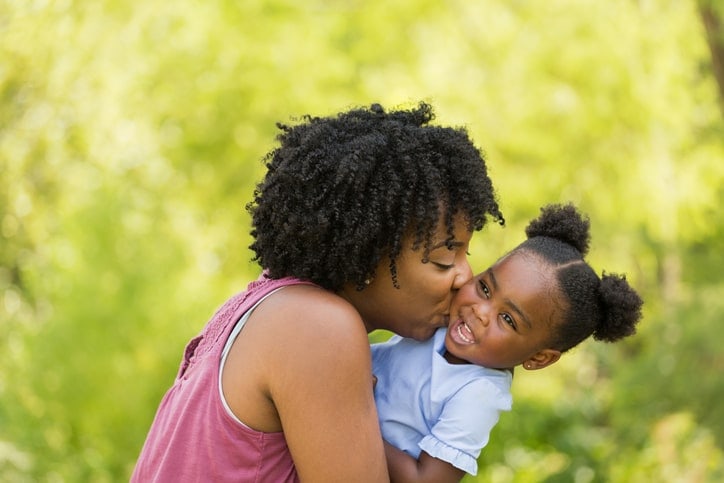
Research suggests that parents can have an important impact on the development of emotion recognition in young children. Here are some evidence-based tips.
1. Be a “mind-minded” parent — a caregiver who engages kids in insightful talk about emotions.
Studies suggest that children develop better “mind-reading” skills when we expose them to accurate, sensitive talk about thoughts and feelings. In particular, kids develop better emotion-reading skills when their parents help them find appropriate labels for the emotions the observe. Parents can also help by discussing the causes and consequences of specific emotions (Castro et al 2015). For tips on how to engage your child in emotion talk, see my article, “Emotion coaching: How to help kids cope with negative feelings.”
2. Ask children to consider the overall situation and context, and use that information to make sense of facial expressions.
We shouldn’t expect kids — especially young children — to rely on facial cues alone. Young children can use their understanding of a situation to help them make sense of facial expressions (Theurel et al 2016). For example, if they see someone drop his ice cream cone, they can imagine how they would feel if this happened to them.
3. Talk with children not only about facial expressions, but also about other forms of body language.
Children are sensitive to much more than a person’s facial expressions. They also notice tone of voice, body posture, and gestures. Whether you are reading a story together, or observing someone in real life, help kids make connections between different kinds of nonverbal cues.
4. For extra practice, try playing emotion identification games.
Researchers have developed training programs that ask kids to practice categorizing the emotions depicted by facial expressions (Grinspan et al 2003; Hubble et al 2015).
For example, in one study, researchers gave typically-developing elementary school students training in the identification and self-production of facial cues. After only 6 half-hour sessions, children improved their ability to read emotions compared with controls (Grinspan et al 2003).
Can we apply the same principles at home? One way is to assemble a collection of photographs, and use them to create “emotion cards.” I like this option the best, because it allows us to choose images that look genuine and provide context, and show some of the variety of expressiveness discussed above. Instead of representing happiness with a single type of facial expression — like a toothy grin — we can show kids a range of authentic, happy signals.
Alternatively, you can buy cards especially made for the purpose. For example, Picture by Picture sells a set of 40 cards depicting a range of emotions modeled by a diverse range of faces. Some of the cards (notably the ones depicting “fear”) look very staged and campy to me, but this is a widespread problem for commercial emotion cards. I have had trouble finding alternative sets that feel entirely genuine. Maybe you will have better luck with our own search. Meanwhile, you can check the price on Amazon here. (Note: Parenting Science will receive a small commission from Amazon for purchases made through this link.)
And whatever cards you use, keep in mind what we’ve discussed above about the variety and ambiguity of facial expressions. A card that one person has labeled “worried” might strike someone else as “sad.” Without context clues (and knowing that the photographed individual really was feeling), it might not be possible to establish which emotion is the correct one.
What can you do with your cards? Here are some suggestions.
Imitating faces and guessing emotions
Facial mimicry isn’t just an exercise in theater. Research suggests that it also helps us identify emotions, and experience a resonance of those emotions (Sato et al 2013). So try this: Shuffle the cards and put them face down. The first player picks a card, keeps it to herself, and then mimics the expression on the card. The other player(s) have to guess the correct emotion.
Matching faces to situations
In this game, you’ll need an extra set of cards — each depicting an emotion-evoking situation. Then players will attempt to match each facial expression card with the most appropriate situation.
The images for your situation cards can come from a number of sources. You can draw your own, or cut pictures out of magazines. Some situation cards may evoke multiple emotions.
Creative scenarios: Why that face?
In this simple game, players take turns picking a card from the deck and inventing a reason for the facial expression displayed. For example, if the player picks a card with a woman looking surprised, you might say, “She just found a dinosaur in her bathtub.”
Collaborative, improvisational storytelling: A game inspired by a child psychology tool
The MacArthur Story Stem Battery is a tool psychologists use to get young children to discuss and imagine certain themes and concepts — like separations from loved ones, conflict with peers, and moral dilemmas. The psychologist sets up a hypothetical situation, and encourages the child to flesh out the details of what happens next.
In this cooperative game, players can decide together on the basic scenario. It can be fanciful or outlandish, but it should involve characters with realistic emotional responses. Then players create a narrative together, taking turns and building on each others ideas.
To begin, the first player picks an emotion card, and starts the narrative. He can take the story into any direction he likes, but he must incorporate the facial expressions depicted on the card — i.e., events in the story must include a character who . The next player picks a card and continues the narrative, and so on. Players continue to take turns until they have used all the cards or reached a satisfying conclusion.
More reading
What else can adults do to help kids develop their emotional savvy? I mentioned it above, and it’s worth mentioning again. One of the most important strategies is to become your child’s “emotion coach.” To learn more, see my article, “Emotion coaching: Helping kids cope with negative feelings.”
In addition, for helpful advice about fostering empathy, see these evidence-based tips.
References
Acland EL, Peplak J, Suri A, Malti T. 2023. Emotion recognition links to reactive and proactive aggression across childhood: A multi-study design. Dev Psychopathol. 11:1-12.
Acland EL, Jambon M, Malti T. 2021. Children’s emotion recognition and aggression: A multi-cohort longitudinal study. Aggress Behav. 47(6):646-658. d
Aguert M, Laval V, Lacroix A, Gil S, and Le Bigot L. 2013. Inferring emotions from speech prosody: not so easy at age five. PLoS One. 8(12):e83657.
Aviezer H, Trope Y, and Todorov A. 2012. Body cues, not facial expressions, discriminate between intense positive and negative emotions. Science. 338(6111):1225-9.
Barrett LF, Adolphs R, Marsella S, Martinez AM, Pollak SD. 2019. Emotional Expressions Reconsidered: Challenges to Inferring Emotion From Human Facial Movements. Psychol Sci Public Interest. 20(1):1-68.
Bayet L, Behrendt HF, Cataldo JK, Westerlund A, Nelson CA. 2018. Recognition of facial emotions of varying intensities by three-year-olds. Dev Psychol. 54(12):2240-2247.
Borhani K and Nejati V. 2018. Emotional face recognition in individuals withattention-deficit/hyperactivity disorder: a review article. Dev Neuropsychol. 43(3):256-277.
Castro VL, Halberstadt AG, Lozada FT, Craig AB. 2015. Parents’ Emotion-Related Beliefs, Behaviors, and Skills Predict Children’s Recognition of Emotion. Infant Child Dev.;24(1):1-22.
Chronaki G, Garner M, Hadwin JA, Thompson MJ, Chin CY, Sonuga-Barke EJ. 2015a. Emotion-recognition abilities and behavior problem dimensions in preschoolers: evidence for a specific role for childhood hyperactivity. Child Neuropsychol. 21(1):25-40.
Chronaki G, Hadwin JA, Garner M, Maurage P, Sonuga-Barke EJ. 2015b. The development of emotion recognition from facial expressions and non-linguistic vocalizations during childhood. Br J Dev Psychol. 33(2):218-36.
Cowen AS, Keltner D, Schroff F, Jou B, Adam H, Prasad G. 2021. Sixteen facial expressions occur in similar contexts worldwide. Nature. 589(7841):251-257.
Crivelli C, Jarillo S, Russell JA, Fernández-Dols JM. 2016. Reading emotions from faces in two indigenous societies. J Exp Psychol Gen. 145(7):830-43.
Crivelli C, Russell JA, Jarillo S, Fernández-Dols JM. 2017. Recognizing spontaneous facial expressions of emotion in a small-scale society of Papua New Guinea. Emotion. 17(2):337-347.doi:
de Bordes PF, Hasselman F, Cox RFA. 2021. Children’s perception of facial expressions. Dev Psychol. 57(4):506-518.
Declerck CH, Bogaert S. 2008. Social value orientation: related to empathy and the ability to read the mind in the eyes. J Soc Psychol. 148(6):711-26.
Ekman P. 1973. Cross-cultural studies of facial expression. In P. Ekman (ed): Darwin and facial expression: A century of research in review. New York: Academic Press.
Gao X and Maurer D. 2009. Influence of intensity on children’s sensitivity to happy, sad, and fearful facial expressions. J Exp Child Psychol. 102(4):503-21.
Gao X and Maurer D. 2010. A happy story: Developmental changes in children’s sensitivity to facial expressions of varying intensities. J Exp Child Psychol. 107(2):67-86.
Garcia SE and Tully EC. 2020. Children’s recognition of happy, sad, and angry facial expressions across emotive intensities. J Exp Child Psychol. 197:104881.
Goodfellow S and Nowicki S. 2009. Social adjustment, academic adjustment, and the ability to identify emotion in facial expressions of 7-year-old children. J Genet Psychol. 170(3):234-43.
Grinspan D, Hemphill A, and Nowicki S Jr. 2003. Improving the ability of elementary school-age children to identify emotion in facial expression. J Genet Psychol. 164(1):88-100.
Hubble K, Bowen KL, Moore SC, van Goozen SH. 2015. Improving Negative Emotion Recognition in Young Offenders Reduces Subsequent Crime. PLoS One. 10(6):e0132035.
Kang K, Anthoney L, Mitchell P. 2017. Seven- to 11-Year-Olds’ Developing Ability to Recognize Natural Facial Expressions of Basic Emotions. Perception. 46(9):1077-1089.
Lawrence K, Campbell R, and Skuse D. 2015. Age, gender, and puberty influence the development of facial emotion recognition. Front Psychol. 6:761.
Liu Z, Liu J, Zhang Z, Yu H, Hu F. 2020. Facial Emotion Recognition and Polymorphisms of Dopaminergic Pathway Genes in Children with ASD. Behav Neurol. 2020: 6376842.
Leppänen JM and Hietanen JK. 2001. Emotion recognition and social adjustment in school-aged girls and boys. Scand J Psychol. 42(5):429-35.
Mancini G, Agnoli S, Baldaro B, Bitti PE, Surcinelli P. 2013. Facial expressions of emotions: recognition accuracy and affective reactions during late childhood. J Psychol. 147(6):599-617.
Marsh AA, Kozak MN, and Ambady N. 2007. Accurate identification of fear facial expressions predicts prosocial behavior. Emotion. 7(2):239-51.
Marsh AA, Stoycos SA, Brethel-Haurwitz KM, Robinson P, VanMeter JW, Cardinale EM. 2014. Neural and cognitive characteristics of extraordinary altruists. Proc Natl Acad Sci U S A. 111(42):15036-41.
Naruse S, Hashimoto T, Mori K, Tsuda Y, Takahara M, and Kagami S. 2013. Developmental changes in facial expression recognition in Japanese school-age children. J Med Invest. 60(1-2):114-20.
Olaya-Galindo MD, Vargas-Cifuentes OA, Vélez Van-Meerbeke A, Talero-Gutiérrez C. 2023. Establishing the Relationship Between Attention Deficit Hyperactivity Disorder and Emotional Facial Expression Recognition Deficit: A Systematic Review. J Atten Disord. 26:10870547231154901.
Paulmann S and Uskul AK 2014. Cross-cultural emotional prosody recognition: Evidence from Chinese and British listeners. Cogn Emot. 28(2):230-44.Sato W, Fujimura T, Kochiyama T, and Suzuki N. 2013. Relationships among facial mimicry, emotional experience, and emotion recognition. PLoS One. 8(3):e57889.
Safar K, Vandewouw MM, Pang EW, de Villa K, Crosbie J, Schachar R, Iaboni A, Georgiades S, Nicolson R, Kelley E, Ayub M, Lerch JP, Anagnostou E, Taylor MJ. 2022. Shared and Distinct Patterns of Functional Connectivity to Emotional Faces in Autism Spectrum Disorder and Attention-Deficit/Hyperactivity Disorder Children. Front Psychol. 13:826527.
Sette S, Baumgartner E, Laghi F, Coplan RJ. 2016. The role of emotion knowledge in the links between shyness and children’s socio-emotional functioning at preschool. Br J Dev Psychol. 34(4):471-488.
Theurel A, Witt A, Malsert J, Lejeune F, Fiorentini C, Barisnikov K, Gentaz E. 2016. The integration of visual context information in facial emotion recognition in 5- to 15-year-olds. J Exp Child Psychol. 150:252-271.
Wang L, Chen W, Li H. 2017. Use of 3D faces facilitates facial expression recognition in children. Sci Rep. 7:45464
Content last modified 7/2023
Image of woman displaying facial expressions of happiness, anger, and surprise cropped from a photo series by AlexSutula / shutterstock
Image of mother kissing happy toddler by digitalskillet / istock