
Music lessons may benefit a child’s general academic skills, but so too can art lessons. So does music training deliver any special cognitive benefits? Kids hone auditory skills that can help them decipher speech. And new research hints that certain kinds of music training might boost math and thinking skills.
Here are the details.
How music shapes the brain
Brain scanning technologies have permitted neuroscientists to observe the activity of living brains, and the results are clear: Musicians are different.
For instance, in one study, people who played musical instruments as children showed more robust brainstem responses to sound than did non-musicians (Skoe and Kraus 2012).
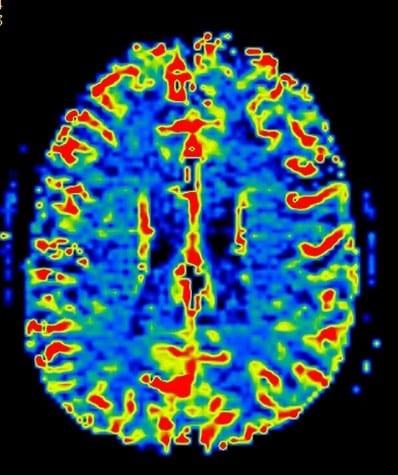
Other studies have reported that kids assigned to receive musical training developed distinctive neural responses to music and speech, evidence of more intense information processing that was linked with improvements in the discrimination of pitch and the segmentation of speech (Moreno et al 2009; Chobert et al 2012; François et al 2012).
And it’s not just a matter of differences in brain activity. There are also differences in brain volume.
If you examine the brain of a keyboard player, you’ll find that the region of the brain that controls finger movements is enlarged (Pascual-Leone 2001).
Moreover, brain scans of 9- to 11-year old children have revealed that those kids who play musical instruments have significantly more grey matter volume in both the sensorimotor cortex and the occipital lobes (Schlaug et al 2005).
In fact, musicians have significantly more grey matter in several brain regions (Schlaug et al 2005), and the effects of music lessons seem to increase with the intensity of training.
One study compared professional keyboard players with amateurs. Although both groups had music training, the professionals practiced twice as much. The professionals also had significantly more grey matter volume in a number of brain regions (Gaser and Schlaug 2003).
Is it merely a question of genetics?
Maybe these brain differences are what lead people to study music in the first place. People don’t develop more grey matter because they undergo musical training. They just happen to start out with more grey matter, and this gives them an advantage that makes musical training easier, or more enjoyable.
Can we attribute all brain differences to such pre-existing, individual variation?
That’s a good question, and we have an answer. Experiments confirm that the brain changes in response to music training (Schlaug 2015).
For example, in one study, non-musicians were assigned to perform a 5-finger exercise on the piano for two hours a day. Within five days, subjects showed evidence of re-wiring. The size of the area associated with finger movements had become larger and more active (Pascual-Leone 2001).
So it’s reasonable to think that the brain develops differently in response to music training. But what do we know about links between music and intelligence?
First, we have the correlational evidence.
If you compare kids in the real world, children who study music tend to perform better academically.
They tend to have stronger verbal and mathematical skills. They tend to perform better on tests of working memory and cognitive flexibility. They even tend to have higher IQs (Fujioka et al 2006; Schellenberg 2006; Patel and Iverson 2007; Hanna-Pladdy and Mackay 2011).
But correlations don’t prove causation, and there is reason to doubt that music training is responsible for these cognitive differences.
It’s clear, for instance, that musical training is linked with affluence, and affluence gives kids many advantages for getting ahead in school.
It’s also possible that parents with greater cognitive ability are more likely to enroll their kids in music lessons. And maybe kids with higher academic ability are more likely to seek out and stick with music lessons — because they find the experience more rewarding (Schellenberg 2006).
To tease apart causation, we need an experimental approach. Ideally, we should begin with kids who have had no prior experience with music training. Then we should randomly assign some of these children to receive music lessons, and measure outcomes. How do they compare with kids who aren’t musically trained?
When researchers have attempted such experiments, they have often reported that kids end up with modest improvements in general cognitive ability. Improvements like better scores on tests of attention, memory, planning, and verbal ability.
Thus, experiments support the idea that musical training can enhance the development of cognitive skills that aren’t directly related to music-making. But keep in mind: Other types of cultural enrichment (like art classes) can have similar effects.
If we want to provide our children with “brainy” enrichment activities, musical training is just one of many.
So is there anything special about music training? Does musical training lead to bigger cognitive gains, for instance? Or help kids in ways that other cultural activities don’t?
Back in 2004, E. Glenn Schellenberg attempted to answer this question. In a study of 144 primary school students, he randomly-assigned 6-year-olds to receive one of four treatments during the school year:
- keyboard lessons
- vocal lessons
- drama lessons
- no lessons
By the end of the school year, all participants experienced a small increase in IQ. However, the kids who received music lessons showed significantly more improvement than the other groups did (Schellenberg 2004).
A more recent study randomly assigned 230 primary school students to receive either
- group classes in music fundamentals, including some limited experiences with playing musical instruments in the classroom;
- visual arts training, including lessons in painting, sculpture, and art history; and
- no special training or enrichment.
After two years, kids who’d received the visual arts lessons outperformed their peers on tests of visual-spatial memory. But kids who’d received musical training tended to have higher scores on tests of verbal intelligence and planned, systematic problem-solving (Jaschke et al 2018).
And another, randomized study reports that 8-year-old children showed enhanced reading and pitch discrimination abilities in speech after just 6 months of musical training. Kids in a control group (who took painting lessons instead) experienced no such improvements (Moreno et al 2009).
These studies lend credence to the notion that music training offers distinctive academic benefits. But there are numerous negative findings, too. And in a recent meta-analysis — reviewing 54 studies published between 1986 and 2019 — researchers found little or no evidence that musical training is superior to other types of cultural enrichment (Sala and Gobet 2020).
Still, there’s reason to wonder. As noted above, one study found that children developed an enhanced ability to discriminate different pitches in speech. That makes sense, given the auditory nature of both speech and music. Isn’t it possible that musical training boosts other auditory skills, auditory skills that could help kids perform well at school?
Maybe so. For instance, after two years of musical training, students have shown improvements in their ability to pick out speech sounds from background noise — a skill that might help kids focus in noisy classrooms and other environments (Slater et al 2015; Tierney et al 2013).
And not all “musical training” is the same. Maybe music lessons provide greater cognitive benefits when kids learn to read music and play a musical instrument.
In many studies, researchers have tested only a rather casual form of music training — training that we might characterize as “music appreciation” or “music sensitization.” Kids learn a little about rhythm and music theory; they learn to identify the sounds of different musical instruments; they sing and clap together; they get the chance to beat some drums, or play a melody on a recorder.
Such lessons can be enjoyable and beneficial. But how do they compare with more intense, rigorous training — the kind of musical training students get when they learn to read music, and play a complex musical instrument, like the violin?
Clara James and her colleagues recently investigated this question in an experiment involving 69 elementary school students.
Half the kids were randomly assigned to the sort of casual musical training mentioned above — music sensitization classes. The remaining half was randomly assigned to the more focused, rigorous sort of musical training: Twice each week, they learned to play a string instrument in an orchestra class.
The researchers tested children at the beginning of the study, and again at the end. After two years of training, the kids who’d been assigned to orchestra class were ahead on a variety of measures. They experienced bigger improvements in “working memory, attention, processing speed, cognitive flexibility, matrix reasoning, sensorimotor hand function, and bimanual coordination”(James et al 2020).
So this study provides us with evidence that formal, rigorous music instruction — learning to read music and play a string instrument — has a bigger impact on general cognitive skills.
Where does this lead us?
Music training can bring us a lot of joy. It can deepen our understanding of one of humanity’s greatest forms of intellectual expression.
As a bonus, musical training programs also appear to help kids improve certain non-musical, academic skills. But musical training isn’t unique in this respect. Other cultural pursuits — like art lessons — can also give students an intellectual boost.
Does musical training offer any special cognitive advantages? That remains possible. Formal music training — the sort that teaches kids how to read music and play a complex musical instrument — requires kids to discriminate differences in pitch, and recognize distinct patterns of sound. It wouldn’t be surprising if these skills led to enhanced perception of speech, and so far, studies support the idea.
Similarly, students of music are required to
- focus attention for long periods of time;
- decode a complex symbolic system (musical notation);
- track and reproduce rhythms;
- understand ratios and fractions (e.g., a quarter note is half as long as a half note); and
- improvise within a set of musical rules.
If kids hone such skills, might not their improvements transfer to other domains, like language and mathematics (Schellenberg 2005; Shlaug et al 2005)? The study by Clara James and her colleagues suggests that a two year program of serious study might enhance working memory, attention, and problem solving skills.
And other researchers are testing to see if music reading lessons can help elementary school kids improve their understanding of ratios and fractions. The early results look promising (Azaryahu et al 2020).
So this remains an interesting area of research to follow. And meanwhile? We’ve got lots of good reasons to encourage kids to study music.
More reading about enhancing academic performance in children
You can impact your child’s academic performance in a number of ways. For more information, check out these Parenting Science articles:
- Working memory tips: How to help kids focus and stick to a plan
- Teaching self-control: Evidence-based tips
- 10 tips for improving spatial skills in children and teens
Heard about the “Mozart effect”? Wondering what the latest science tells us about that? Here’s my take.
Resources
You can help fuel your child’s interest by sharing the world’s best music with him. I’ve found a website, Classic Cat, where you can do this for free.
It’s a catalog of over 4800 classical performances (many of them complete) that can be downloaded free and legally.
Best of all, the site is indexed by composer, performer, genres, and even instruments. So if your child wants to know what an oboe sounds like, you can quickly find and download Mozart’s Quartet and Oboe for Strings in F major.
References: Music and intelligence
Azaryahu L, Courey SJ, Elkoshi R, Adi-Japha E. 2020. ‘MusiMath’ and ‘Academic Music’ – Two music-based intervention programs for fractions learning in fourth grade students. Dev Sci. 23(4):e12882.
Chobert J, François C, Velay JL, and Besson M. 2012. Twelve Months of Active Musical Training in 8- to 10-Year-Old Children Enhances the Preattentive Processing of Syllabic Duration and Voice Onset Time. Cereb Cortex. 2012 Dec 12. [Epub ahead of print]
Costa-Giomi E. 1999. The effects of three years of piano instruction on children’s cognitive development. Journal of research in music education 47: 198-212.
François C, Chobert J, Besson M, and Schön D. 2012. Music Training for the Development of Speech Segmentation. Cereb Cortex. 2012 Jul 10. [Epub ahead of print]
Fujioka T, Ross B, Kakigi R, Pantev C, and Trainor LJ. 2006. One year of musical training affects development of auditory cortical-evoked fields in young children. Brain. 129(Pt 10):2593-608
Gaser C and Schlaug G. 2003. Brain structures differ between musicians and nonmusicians. Journal of Neuroscience 23: 9240-9245.
Hanna-Pladdy B, Mackay A. 2011. The relation between instrumental musical activity and cognitive aging. Neuropsychology. 2011 Apr 4. [Epub ahead of print]
Hetland L. 2000. Listening to music enhances spatial-temporal reasoning: Evidence for the “Mozart effect.” The Journal of Aesthetic Education, 34(3/4): 105–148.
Hyde KL, Lerch J, Norton A, Forgeard M, Winner E, Evans AC, Schlaug G. 2009. The effects of musical training on structural brain development: a longitudinal study. Ann N Y Acad Sci. 1169:182-6.
James CE, Zuber S, Dupuis-Lozeron E, Abdili, Gervaise D, Kliegel M. 2020. Formal String Instrument Training in a Class Setting Enhances Cognitive and Sensorimotor Development of Primary School Children. Front Neurosci. 2020; 14: 567.
James CE, Zuber S, Dupuis-Lozeron E, Abdili, Gervaise D, Kliegel M. 2020. Formal String Instrument Training in a Class Setting Enhances Cognitive and Sensorimotor Development of Primary School Children. Front Neurosci. 14: 567.
Jaschke AC, Honing H, and Scherder EJA. 2018. Longitudinal Analysis of Music Education on Executive Functions in Primary School Children. Front Neurosci. 12:103.
Kraus N, Slater J, Thompson E, Hornickel J, Strait D, Nicol T and White-Schwoch T (in press). Music enrichment programs improve the neural encoding of speech in at-risk children. Journal of Neuroscience.
Mehr SA, Schachner A, Katz RC, Spelke ES. 2013. Two randomized trials provide no consistent evidence for nonmusical cognitive benefits of brief preschool music enrichment. PLoS One. 8(12):e82007.
Moreno S, Marques C, Santos A, Santos M, Castro SL, and Besson M. 2009. Musical training influences linguistic abilities in 8-year-old children: more evidence for brain plasticity. Cereb Cortex. 19(3):712-23.
Moreno, S., Bialystok, E., Barac, R., Schellenberg, E. G., Cepeda, N. J., & Chau, T. 2011. Short-term music training enhances verbal intelligence and executive function. Psychological Science. Epub 2011 Oct 3.
Pascual-Leone A. 2001. The Brain That Plays Music and Is Changed by It. Annals of the New York Academy of Sciences 930 (1): 315–329.
Patel AD and Iversen JR. 2007. The linguistic benefits of musical abilities. Trends in Cognitive Sciences, 11:369-372.
Rauscher FH, Shaw GL and Ky, KN. 1993. Music and spatial task performance. Nature 365: 611.
Rauscher FH, Shaw GL, Levine, LJ, Wright EL, Dennis WR, and Newcomb RL. 1997. Music training causes long-term enhancements of preschool children’s spatial-temporal reasoning. Neurological Research 19: 2-8.
Rauscher FH. 2002. Mozart and the mind: Factual and fictional effects of musical enrichment. In J Aronson (ed), Improving academic achievement: Impact of psychological factors in education, pp. 267-278. San Diego: Academic Press.
Sala G and Gobet F. 2020. Cognitive and academic benefits of music training with children: A multilevel meta-analysis. Mem Cognit. 2020 Jul 29. doi: 10.3758/s13421-020-01060-2. Online ahead of print.
Schellenberg EG. 2004. Music lessons enhance IQ. Psychological Science 15(8) 511-514.
Schellenberg EG. 2005. Long-term positive associations between music lessons and IQ. Journal of Educational Psychology 98(2): 457-468.
Schellenberg EG. 2006. Long-term positive associations between music lessons and IQ. Journal of Educational Psychology 98(2): 457-468.
Schellenberg EG. 2011. Examining the association between music lessons and intelligence. Br J Psychol. 102(3):283-302.
Schlaug G. 2015. Musicians and music making as a model for the study of brain plasticity. Prog Brain Res. 217:37-55.
Schlaug G, Norton A, Overy K and Winner E. 2005. Effects of music training on the child’s brain and cognitive development. Ann. N.Y. Acad. Sci. 1060: 219-230.
Skoe E and Kraus N. 2012. A little goes a long way: how the adult brain is shaped by musical training in childhood. J Neurosci. 32(34):11507-10.
Slater J, Skoe E, Strait DL, O’Connell S, Thompson E, Kraus N. 2015. Music training improves speech-in-noise perception: Longitudinal evidence from a community-based music program. Behav Brain Res. 2015 Sep 15;291:244-252. Behav Brain Res.291:244-252.
Tierney A, Krizman J, Skoe E, Johnston K, and Krus N. 2014. High school music classes enhance neural processing of speech. Frontiers in psychology. 4: 855.
Content of “Music and intelligence” last modified 8/2020
Portions of this text derive from an earlier article written by the same author.
Title image of little girl at piano with adult by greenleaf123 / istock
image of brain scan by wenht / istock
boy playing French horn by Natalia Lebedinskaia / shutterstock