Doing research on potty training techniques? This article describes the major methods and (where such information is available) reviews the scientific evidence in favor of each one.
As you’ll see below, some approaches depend on parent-led practice runs. Others rely on child-initiated trial-and-error. But all modern methods share several important points:
- all methods use praise and affection;
- all methods are compatible with using rewards (or example, giving your child a sticker for each successful use of the potty);
- none of the methods use punishment (experts warn this is detrimental); and
- all training processes should follow certain health and safety guidelines.

The last of these — health and safety guidelines — are described in my article on how to avoid toilet training resistance, infections, and other problems. The rest of this article provides you the information you need to create your own, personal potty training plan. The options include:
- Infant potty training
- Child-oriented potty training
- Toilet training in less than a day and other “fast track” methods
- Gradual, parent-led toilet training
- The “bare-bottom” method
At present, there is no consensus among researchers about which is best. It depends on the goals and preferences of the caregiver (de Carvalho Mrad et al 2021). So, as you consider your options, remember that each child is different. Choose potty training techniques that you feel comfortable with, and don’t hesitate to drop techniques that seem to upset your child.
Infant potty training techniques
In many parts of the non-Western world, infant training is the norm. The goals differ. Babies are obviously incapable of toileting independently. But, with vigilance and supervision, parents and babies can learn to work together, reading each other’s signals, so that the family doesn’t have to rely on diapers.
Dubbed “elimination communication” (or, alternatively, “Assisted Infant Toilet Training”), this traditional approach is safe and gentle, and, in recent years, it has been successfully employed in Western settings. For example, in a study that included families living in the United States, researchers tracked 87 infants over the course of their first year postpartum. By the end of the study, approximately one-third of families had eliminated diapers altogether, and the use of training pants and underwear increased by 200-300%. Caregiver satisfaction was high (Bender et al 2021).
For more information about elimination communication, see my article on traditional infant potty training. In addition, if your baby is old enough to sit up unassisted, you also might want to check out this article about self-initiated infant toilet training.
The child-oriented approach to toilet training
Brazelton TB and Sparrow JD. 2004. Toilet training the Brazelton way. Cambridge, MA: De Capo Press.
T. Berry Brazelton introduced his child-oriented approach in 1962. A practicing pediatrician, Brazelton had observed an increase in toilet training failures, including toilet refusal, severe constipation, and (shudder!) stool smearing (Brazelton and Sparrow 2004). He reasoned that the prevailing potty training techniques — which emphasized parent-led practice drills — were pushing toddlers before they were ready. As a remedy, Brazelton designed an approach that is gradual and gentle.
Overview of the method
Brazelton’s potty training techniques are outlined in his book, Toilet training the Brazelton way (2004). He recommends that parents delay toilet training until children show spontaneous signs of being ready (for a list of promising signs, see this Parenting Science article). Once parents observe the signs, they can follow a series of steps, but the precise timing depends on the child.
You should never push forward with a step if your child doesn’t show interest. If you child is reacts negatively, you pull back and wait. There is no schedule or timeline to follow. The child sets the pace.
The first step is taking your child to the store to pick out a potty. Next, you encourage your child to sit, fully clothed, on the potty. Then, after one or two weeks (at which point your child should have become comfortable with occasionally sitting on the potty), you can try removing your child’s diaper and asking him or her to try sitting on it. But don’t insist. You can also start demonstrating the function of the potty: After removing a soiled diaper, ask your child to watch as you empty the contents into the potty.
The big breakthrough — the day your child sits on the potty chair with a naked bottom and actually eliminates — is supposed to happen spontaneously. But parents need to lay the groundwork. They should leave potty chairs out where children can freely access them, and encourage their children roam around the home without diapers on. If kids are slow to use the potty, parents can ask their children if they would like to help. But the goal is to let kids think that potty training is their own idea — not something being pushed on them by others. The final steps (such as emptying the potty chair into the toilet, and flushing the toilet) should wait until your child shows interest in them.
Outcomes
Because each child sets his or her own pace, training times vary. However, it’s safe to say that the Brazelton approach is associated with relatively late training. According to data that Brazelton analyzed in 1962, the average age for starting training was 24 months. More than 50% of his trainees completed training by 27 months, but some kids were much older. The average (mean) age of competion was 33 months (Brazelton 1962). A more recent study (Taubman et al 2003) reported even later completion times — around 34-38 months.
Does age matter? It might. A prospective study of 8000 children found that kids who started training (of any kind) after 24 months were at higher risk for experiencing slow progress and setbacks (Joinson et al 2009). Perhaps children who start later are more likely to resist change. In addition, at least 7 studies have reported that completion of toilet training after 24 months is linked with higher rates of wetting the bed later in life (Carvalho et al 2022).
But hold age constant, and your choice of toilet training methods might not matter. When a retrospective study compared child-led training and gradual, parent-led training, researchers found no differences with respect to long-term outcomes in dysfunctional voiding (Colaco et al 2013).
Toilet training in “less than a day” and other “fast-track” potty training techniques
Azrin NH and Foxx RM. 1974. Toilet training in less than a day.
One-day potty training techniques were first introduced in 1974 by psychologists Nathan H. Azrin and Richard M. Foxx. The techniques were designed for kids who are 20 months or older and who have had no previous toilet training experiences. Other, more recent methods draw on the same potty training techniques, which include
- teaching through pretend play (with a doll that simulates urination);
- positive reinforcement (food rewards);
- practice drills; and
- over-correcting for accidents (making kids perform pretend, practice runs immediately after he or she has peed in her pants).
Overview of the method
For details, see my Parenting Science article about “fast track” potty training techniques.
Outcomes
Do these methods work? Scientific studies suggest that most parents who attempt fast-track potty training techniques will be pretty successful…if the parent follows the instructions closely AND everyone — parent and child — is comfortable with the process. But for some families, this approach may feel too regimented. For details, check out the link (above) to my article about training kids on the “fast track”.
Gradual, parent-led toilet training
This approach combines several potty training techniques. Like Azrin and Foxx’s approach, the method is parent-led. Like Brazelton’s approach, this method is gentle and gradual. There are several variants of this approach. Here I describe Barton Schmidt’s version. Dr. Schmidt is professor of pediatrics at the University of Colorado School of Medicine (Schmidt 2004b).
Overview of the method
Schmidt encourages parents to plan ahead. Months before you plan to begin training, help your child get ready (see my article, “How to prepare your child for potty training”). Take your child to the store to pick out a potty chair. At home, leave the chair wherever your child spends most of his or her time. Encourage your child to sit and play on it while fully clothed. After a couple of weeks—when your child is accustomed and comfortable with the potty chair—you can begin training.
Start with practice runs. Make sure your child is wearing minimal, easy-to-remove clothing. If it’s warm enough, have your child wear a diaper only. Then watch your child for signs that he or she needs to eliminate (grunting, making faces, squirming, pulling at the diaper, etc.). When the time is right, remove your child’s diaper, and place him or her on the potty. Ask your child to use the potty (for example, say “Try to go pee-pee in the potty…”).
Schmidt recommends that parents reward kids (with praise, affection, or stickers) immediately after a succesfully use of the potty. If kids don’t manage to pee or poop? You can let them stay on the potty for a while (up to five minutes, if they want to try this) before ending the practice run. But if kids want to give up, don’t force them to sit. Praise them (“Good try!”), and attempt another practice run later.
Throughout, you should focus on being positive. Avoid a display of negative emotions. Show affection, patience, and an upbeat attitude.
What if you have trouble telling when your child needs to pee?
Catching your child during the right moment is important for this method, so Schmidt suggests that you hold practice runs about 45 minutes after your child has finished a large drink, or after two hours without urinating. Likewise, if you have trouble detecting defecation, stage a practice run after a large meal or after 24 hours without a bowel movement.
What about accidents?
When kids wet or soil their pants, change them as soon as possible. Schmidt wants kids to get accustomed to wearing only clean, dry pants.
How many practice runs should you make?
Schmidt warns that parents should ration the number of practice runs — perhaps no more than 100 total. Practicing more than a few times a day may prompt children to resist. Once your child seems to get the hang of things, stop practice runs and replace them with gentle reminders. Like practice runs, reminders should be used sparingly. If you push too much, your child may start to rebel.
What else should parents do?
Schmidt advises parents to keep up a steady stream of praise — whenever a child uses the potty. And, after a child has taken the initiative and peed in the potty at least 10 times, he recommends that parents introduce “big-kid underwear.” Portray this as a reward for progress, and allow kids to choose underpants for themselves. Just make sure that the garments are loose-fitting, so your child can them pull up and down without your help. Once your child starts wearing underpants, reserve diapers for sleeping and travel.
According to Schmidt, practice runs and reminders should be unnecessary after 1-2 months. Children should be using the potty without prompting. However, it may take up to 6 months for your child to complete training. If children are slow to make the final transition, Schmidt recommends trying the bare bottom method (below). Other important potty training techniques that Schmidt recommends include:
- Multiple potty chairs. Your child is more likely to remember to use the potty if he can see it. Put potty chairs in multiple locations.
- Encourage fluid consumption. The more your child drinks, the more frequently your child can practice potty skills.
- Time-ins. Be generous with physical affection and reassurance. Potty training can be discouraging. Let kids know that you love them and have confidence that they will eventually succeed.
Outcomes
As noted above, a retrospective study evaluated the long-term health outcomes associated with this method and with child-led training. The researchers that neither approach was linked with long-term dysfunctional voiding problems (Colacco et al 2013).
The “bare bottom” method
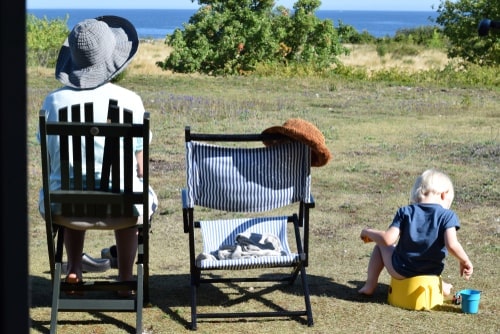
Pediatricians have recommended this approach for children over 30 months who have used the potty several times with parental assistance (Schmidt 2004a). The method is based on the premise that kids dislike wetting themselves. Let them run around without pants for a few hours, and they will figure out by themselves when to use the potty.
Overview of the method
Before you begin, reserve at least one six-hour block of time (or a weekend) for training. Some children might require several consecutive days.
Remove all distractions, strip your child below the waist and let him or her play. Offer your child lots of fluids to create many opportunities to pee. Keep your child within easy access of a potty chair at all times. This is easiest if you confine your child to a room (or even better, a backyard if it’s warm outside). Stay with your child, but do not ask him or her to sit on the potty. Be cheerful, and let your child work things out on his or her own.
If you are wondering what happens when your child has accidents, the answer is that you get a mess. For this reason, you’ll want to stage your training session in a place that is easy to clean. Ideally, you should hold your training session outside on a warm day. Otherwise, you might try confining your child to the kitchen and other areas of the house that are more easily cleaned. When you do clean up, avoid giving your child any lectures or lessons. Be upbeat and affectionate.
Outcomes
I can’t find any scientific studies testing this method. Dr. Barton Schmidt prescribes this potty training method to patients who have had difficulty making the transition from practice runs to toileting independence. He reports high success rate (Schmidt 2004a).
Other potty training techniques
Elizabeth Pantley has published her own guide to toilet training, The No-Cry Potty Training Solution: Gentle Ways to Help Your Child Say Good-Bye to Diapers. Like Brazelton, Pantley emphasizes the importance of waiting until your child is ready. But she also believes in parental reminders. Her recommended potty training techniques include the use of rewards.
More reading
If you’re looking for additional information about toilet training, check out these Parenting Science articles:
- What’s the right age to start potty training? It depends on your goals
- The science of toilet training: What research tells us about timing
- Signs of toilet training readiness: When to start, and when to wait
- Potty training problems and solutions: An evidence-based guide
References: Potty training techniques
Azrin NH and Foxx RM. 1974. Toilet training in less than a day. New York: Pocket Books.
Baird DC, Bybel M, Kowalski AW. 2019. Toilet Training: Common Questions and Answers. Am Fam Physician. 100(8):468-474.
Bender JM, Lee Y, Ryoo JH, Boucke L, Sun M, Ball TS, Rugolotto S, She RC. 2021. A Longitudinal Study of Assisted Infant Toilet Training During the First Year of Life. J Dev Behav Pediatr. 42(8):648-655.
Brazelton TB 1962. A child oriented approach to toilet training. Pediatrics, 29: 121-128.
Brazelton TB and Sparrow JD. 2004. Toilet training the Brazelton way. Cambridge, MA: deCapo Press.
Colaco M, Johnson K, Schneider D, Barone J. 2013. Toilet training method is not related to dysfunctional voiding. Clin Pediatr (Phila). 52(1):49-53.
Crane, T. 2006. Potty Train Your Child in Just One Day: Proven Secrets of the Potty Pro. Fireside.
Carvalho TA, Vasconcelos MMA, Guimarães ICO, Dutra MF, Lima EM, Bastos Netto JM, de Bessa Junior J, Simões E Silva AC, de Carvalho Mrad FC. 2022. Relationship between toilet training process and primary nocturnal enuresis in children and adolescents – A systematic review. J Pediatr Urol. S1477-5131(22)00339-4.
de Carvalho Mrad FC, da Silva ME, Moreira Lima E, Bessa AL, de Bessa Junior J, Netto JMB, de Almeida Vasconcelos MM. 2021. Toilet training methods in children with normal neuropsychomotor development: A systematic review. J Pediatr Urol. S1477-5131(21)00278-3.
Joinson C, Heron J, Von Gontard A, Butler U, Emond A, Golding J. 2009. A prospective study of age at initiation of toilet training and subsequent daytime bladder control in school-age children. J Dev Behav Pediatr. 30(5):385-93.
Pantley E. 2006. The No-Cry Potty Training Solution: Gentle Ways to Help Your Child Say Good-Bye to Diapers. New York: McGraw Hill.
Schmidt BA. 2004a. Toilet training: Getting it right the first time. Contemporary Pediatrics, 21: 105-119.
Schmidt BA. 2004b. Toilet training problems: Underachievers, refusers, and stool holders. Contemporary Pediatrics, 21: 71-82.
Taubman B. 1997. Toilet training and toileting refusal for stool only: A prospective study. Pediatrics, 99: 54-58.Taubman B, Blum NJ, and Nemeth N. 2003. Stool toileting refusal: A prospective intervention targeting parental behavior. Archives of Pediatrics and Adolescent Medicine, 157: 1193-2003.
Content last modified 10/22
Portions of this text derive from earlier versions of this article, written by the same author. Updates reflect new published research.
Image credits
image of boy sitting alongside a toy bear on the potty by istock / EvgeniiAnd
image of boy using potty chair outside by MalinBjornram / shutterstock