© 2020 Gwen Dewar, Ph.D., all rights reserved
Children notice stereotypes about race, gender, and wealth. And their awareness of these stereotypes is distracting — so much so that it can actually interfere with learning and academic performance. But we can help kids overcome the threat. Here’s what every parent needs to know.
The everyday reality of stereotype threat
Societies everywhere sort people into categories, and children are paying attention.
Not only do they notice cues about gender, wealth, and ethnicity, they also perceive the stereotypes that go with these categories. And it starts early.
- Toddlers are quick to pick up on cultural norms about gender, and apply them to roles, activities, and toys (Halim et al 2016).
- Four-year-olds expect wealthy students to be more competent in the classroom (Shutts et al 2016)
- Elementary school children are familiar with negative racial stereotypes (Wegmann et al 2017). They also tend to believe that members of out-groups are less moral (Liberman et al 2017).
And kids are themselves subjected to bias. As I explain elsewhere, experiments show that Black children are more likely to be misperceived as angry — even when their facial expressions are neutral (e.g., Halberstadt et al 2020).
What price do we pay for these attitudes and biases?
There are the conspicuous costs: Mistreatment, bullying, hate crimes. Social discrimination and injustice.
But there is also a more subtle cost — the losses we suffer when we become self-conscious about stereotypes.
Other people are watching, expecting me to confirm their prejudices. Can I prove them wrong?
It isn’t so easy — proving people wrong — because our cognitive resources are distracted. Instead of focusing entirely on the task at hand, we feel compelled to monitor the threat, and keep our emotions under control. In some cases we might even feel helpless, or ready to give up.
The problem was first introduced to psychology in the 1990s by psychologists Claude Steele and Joshua Aronson (1995). They called the phenomenon “stereotype threat,” and decades of research have confirmed their original prediction:
People tend to perform worse on tests when they become self-conscious about negative stereotypes pertaining to their own ethnicity or sex.
This has been shown for a variety of academic subjects, including mathematics. It has even been shown for tests of fluid intelligence.
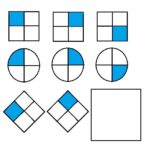
For example, in one study, researchers presented a highly-regarded test of fluid, nonverbal intelligence — Raven’s Advanced Progressive Matrices (APM) — to Black and White undergraduates (Brown and Ray 2006).
Students took the APM under three different conditions.
- In one condition, students were given the standard instructions for taking the test.
- In another, students were also told that the APM was an IQ test.
- In a third condition, the APM wasn’t presented as a test at all. Students were told that APM was a set of puzzles and that the researchers wanted their opinions of them.
Consistent with stereotype threat theory, the Black students did more poorly than did the White students when the APM was presented as a test (conditions 1 and 2).
When the APM wasn’t pitched as a test, Black students performed just as well as White students did.
Is this a problem for young adults only? Older, more sophisticated minds who’ve had many years to observe stereotypes in action?
Apparently not, because the effect has been replicated on young children as well.
Michel Désert and his colleagues presented a version of the Raven’s Matrices to kids in France.
The children ranged in age from 6 to 9 years, and their performance didn’t vary as a function of the instructions they received — not if they came from affluent families.
But the story was different for children of low socioeconomic status.
These kids performed more poorly on the Raven’s Matrices if they had been told it was a test of their cognitive ability (Désert et al 2009).
So stereotype threat doesn’t harm only grown-ups. Nor is it the special nemesis of any one group. Over the years, experiments have shown the threat to affect a wide range of individuals, including
- elementary school boys who believe that girls are academically superior (Hartley and Sutton 2013);
- young girls reminded of the “girls are bad at mathematics” stereotype (Galdi et al 2014; Flore et al 2015);
- overweight children who are affected by the “obese people are less intelligent” stereotype (Guardabassi and Tomasetto 2020);
- the elderly on cognitive and memory tasks (Lamont et al 2016);
- immigrants on tests of verbal achievement (Appel et al 2015);
- White male college students who, when reminded of the stereotype of the Asian mathematics whiz, suffer worse scores on mathematics tests (Aronson et al 1999).
Beyond test anxiety: How stereotypes might interfere with learning, and steer kids away from rewarding careers
The effect on test-taking is bad enough. But what if stereotypes do more than undermine test performance? What if they also interfere with a student’s ability to learn in the first place?
There’s good reason to think this is true (Rydell et al 2010; Taylor and Walton 2011).
First, consider working memory — your mind’s ability to track multiple pieces of information at once, and stay focused.
We need good working memory skills to pay attention, follow directions, and execute plans. But working memory is a delicate thing, easily frazzled when we feel threatened.
In experiments, people reminded of negative stereotypes have suffered immediate dips in working memory performance (Pennington et al 2016).
Researchers suspect it’s because they divert precious working memory resources to keep their emotions under control, reducing their capacity to handle other information (van Ast et al 2016).
Second, consider how stereotypes might affect a student’s motivation.
People who feel targeted by negative stereotypes are more likely to discount the validity or fairness of tests (Lesko and Corpus 2006; Klein et al 2007). Who likes school under these circumstances?
And even positive stereotypes could cause trouble. When individuals believe they belong to a group with “natural ability,” they might put in less effort (Stone 2002).
So does stereotype threat explain all achievement disparities?
No. There are many reasons why some groups outperform others.
For example, kids raised by traditional Chinese parents may have several cultural advantages that increase their chances of academic success.
And in an analysis of research testing the effects of stereotype threat on women’s math achievement, Gijsbert Stoet and David C. Geary (2012) report that many studies have suffered from methodological flaws. When the researchers confined analysis to studies that met their methodological standards, only 1 in 3 studies detected an effect.
The conflicting results may someday be resolved. For instance, feeling intrinsically powerful tends to protect individuals from the effects of stereotype threat (van Loo and Rydell 2013; Pillaud et al 2015). So it’s possible that some failures to replicate reflect differences in perceived power among those taking the tests.
But regardless, there are good reasons to be cautious. We shouldn’t assume that stereotype threat accounts for all social disparities in achievement.
How, then, can we protect kids from the effects of stereotype threat?
Obviously, we can’t wave a magical wand and remove harmful stereotypes from the public consciousness. But there are some concrete steps we can take to help.
6 tips for neutralizing stereotype threat
1. Present children with stereotype-defying role models.
Experiments suggest that we can counteract stereotype threat by presenting students with positive role models — extraordinary achievers who defy social stereotypes.
In some cases, reading about such high achievers has helped students perform better on tests (McIntyre et al 2005; Bagès and Martinot 2011).
In other cases, researchers didn’t observe a boost in test performance — not when experiment volunteers had reason to feel personally threatened by a stereotype.
But presenting role models still had a beneficial effect: Students subsequently reported a greater interest in pursuing a career similar to that of the role models (Shapiro et al 2012).
2. Encourage kids to adopt an effort-based, “growth” theory of cognitive ability.
When we believe that intelligence is a fixed, unchangeable trait, we may be especially vulnerable to the effects of stereotype threat.
Conversely, embracing a “growth” theory of intelligence seems to inoculate students against the negative effects of stereotype threat (Aronson et al 2002; Good et al 2007; Bagès and Martinot 2011).
For more information, see my article about the “growth” theory of intelligence.
3. Support your child’s working memory skills.
Given the evidence that stereotypes can sap working memory, it makes sense to help children maximize their working memory potential. For more information, read these Parenting Science evidence-based tips.
4. Before tests, provide students with an opportunity to reflect on their most cherished value…
When people reflect on their values, it seems to have a calming effect. They may feel less threatened by failure, reducing test anxiety.
When researchers tested this tactic on college undergraduates, they found that students became less vulnerable to stereotype threat (Shapiro et al 2013). Merely writing about a cherished value — and describing a situation that illustrated how that value mattered to them — reduced the effects of stereotype threat.
5. …And don’t remind students of their group identities. Not just before a test!
Have you ever taken a standardized test that began by asking you to answer questions about your personal background? Your race? Sex? Age?
That might be a good way for the test makers to collect demographic data, but it’s bad for the student.
When the Educational Testing Service stopped asking students to state their sex at the beginning of the AP calculus test, female students improved their scores (Danaher and Crandall 2008).
6. Consider teaching kids about the psychology of stereotype threat.
Learning about the effects of stereotype threat may help students fight it. This, at any rate, is the conclusion suggested by an experiment on young adults.
College students performed better on tests if they were first told that their test anxiety could be the result of negative stereotypes, not their “actual ability to do well on the test” (Johns et al 2005).
More reading about helping kids reach their full intellectual potential
For more information about helping kids learn and achieve, see these Parenting Science articles:
- Help kids learn math and science: Ask them to explain and teach!
- 12 tips for improving spatial skills in children and teens
- The cognitive benefits of play
- 12 benefits of outdoor play
- Why toy blocks rock: The benefits of construction play
- The benefits of fantasy fiction and imaginative play
References: Stereotype threat
Appel M, Weber S, and Kronberger N. 2015. The influence of stereotype threat on immigrants: review and meta-analysis Front Psychol. 6: 900.
Aronson J, Fried CB, and Good C. 2002. Reducing the Effects of Stereotype Threat on African American College Students by Shaping Theories of Intelligence. Journal of Experimental Social Psychology, 38, 113-125.
Aronson J, Lustina MJ, Good C, Keough K, Steele CM, and Brown J. 1999. When White Men Can’t Do Math: Necessary and Sufficient Factors in Stereotype Threat. Journal of Experimental Social Psychology, 35, 29-46.
Bagès C and Martinot D. 2011. What is the best model for girls and boys faced with a standardized mathematics evaluation situation: a hardworking role model or a gifted role model? Br J Soc Psychol. 50(3):536-43.
Brown RP and Ray EA 2006. The difference isn’t black and white: stereotype threat and the race gap on Raven’s Advanced Progressive Matrices. J Appl Psychol. 91(4):979-85.
Danaher K and Crandall CS. 2008. Stereotype threat in applied settings re-examined. Journal of Applied Social Psychology, 38, 1639-1655.
Désert M, Préaux M, and Jund R. 2009. So young and already victims of stereotype threat: Socio-economic status and performance of 6 to 9 years old children on Raven’s progressive matrices. European Journal of Psychology of Education 24(2): 207-218.
Galdi S, Cadinu M, and Tomasetto C. 2013. The Roots of Stereotype Threat: When Automatic Associations Disrupt Girls’ Math Performance. Child Dev. 85(1):250-63.
Guardabassi V and Tomasetto C. 2020. Weight status or weight stigma? Obesity stereotypes-Not excess weight-Reduce working memory in school-aged children. J Exp Child Psychol. 189:104706.
Halberstadt AG, Cooke AN, Garner PW, Hughes SA, Oertwig D, Neupert SD. 2020. Racialized emotion recognition accuracy and anger bias of children’s faces. Emotion. 2020 Jul 2. doi: 10.1037/emo0000756. Online ahead of print.
Hartley BL and Sutton RM. 2013. A stereotype threat account of boys’ academic underachievement. Child Dev. 84(5):1716-33.
Hess TM, Hinson JT, and Hodges EA. 2009. Moderators of and mechanisms underlying stereotype threat effects on older adults’ memory performance. Exp Aging Res. 35(2):153-77.
Johns M, Schmader T and Martens A. 2005. Knowing is half the battle: Teaching stereotype threat as a means of improving women’s math performance. Psychological Science, 16, 175-179.
Klein O, Pohl S, and Ndagijimana C. 2007. The influence of intergroup comparisons on Africans’ intelligence performance in a job selection context. The Journal of Psychology, 141, 453-467.
Lamont RA, Swift HJ, and Abrams D. 2015. A Review and Meta-Analysis of Age-Based Stereotype Threat: Negative Stereotypes, Not Facts, Do the Damage. Psychol Aging. 30(1): 180–193.
Lesko AC and Corpus JH. 2006. Discounting the difficult: How high math identified women respond to stereotype threat. Sex Roles, 54, 113-125.
Liberman Z, Howard LH, Vasquez NM, Woodward AL. 2017. Children’s expectations about conventional and moral behaviors of ingroup and outgroup members. J Exp Child Psychol. 2017 Apr 9. pii: S0022-0965(17)30171-6.
McIntyre RB, Lord CG, Gresky DM, Ten Eyck LL, et al. 2005. A social impact trend in the effects of role models on alleviating women’s mathematics stereotype threat. Current Research in Social Psychology, 10, 116-136.
Olson KR, Shutts K, Kinzler KD, Weisman KG. 2012. Children associate racial groups with wealth: evidence from South Africa. Child Dev. 83(6):1884-99.
Pillaud V, Rigaud D, Clémence A. 2015. The Influence of Chronic and Situational Social Status on Stereotype Susceptibility. PLoS One. 10(12):e0144582. doi:
Rydell RJ, Shiffrin RM, Boucher KL, Van Loo K, and Rydell MT. 2010. Stereotype threat prevents perceptual learning. Proc Natl Acad Sci U S A. 2010 Jul 26. [Epub ahead of print]
Shapiro JR, Williams AM, and Hambarchyan M. 2013. Are All Interventions Created Equal? A Multi-Threat Approach to Tailoring Stereotype Threat Interventions. J Pers Soc Psychol. 104(2): 277-288.
Shutts K, Brey EL, Dornbusch LA, Slywotzky N, Olson KR. 2016. Children Use Wealth Cues to Evaluate Others. PLoS One. 11(3):e0149360.
Steele CM and Aronson J. 1995. Stereotype threat and the intellectual test performance of African-Americans. Journal of Personality and Social Psychology, 69, 797-811.
Stoet G and Geary DC. 2012. Can stereotype threat explain the sex gap in mathematics performance and achievement? Review of General Psychology 16(1): 93-102.
Stone J. 2002. Battling doubt by avoiding practice: The Effect of stereotype threat on self-handicapping in white athletes. Personality and Social Psychology Bulletin, 28, 1667-1678.
Taylor VJ and Walton GM. 2011. Stereotype threat undermines academic learning. Pers Soc Psychol Bull. 37(8):1055-67.
van Ast VA, Spicer J, Smith EE, Schmer-Galunder S, Liberzon I, Abelson JL, Wager TD. 2016. Brain Mechanisms of Social Threat Effects on Working Memory. Cereb Cortex. 26(2):544-556.
Wegmann KM. 2017. “His Skin Doesn’t Match What He Wants to Do”: Children’s Perceptions of Stereotype Threat. Am J Orthopsychiatry. 2017 Mar 9. doi: 10.1037/ort0000238. [Epub ahead of print]
Content last modified 9/2020
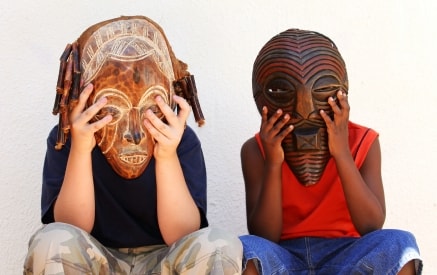
Title image of children wearing masks by Cliff Parnell / istock
image of logical pattern test (similar to that from Raven’s Matrices) by Parenting Science