Why should we care about stress in babies?
Nobody wants babies to feel stressed-out or upset. The stress is contagious, making everyone miserable. And when the stress is intense and chronic…a regular feature of everyday life… children face long-term health consequences.
If babies are exposed to high levels of the stress hormone, cortisol, they are more likely to develop behavior problems and stress-related diseases later in life (Zijlmans et al 2015; Sanchez et al 2015; Asok et al 2013). In the worst case scenario, toxic stress may alter brain growth and shorten the lifespan.
So that’s one reason to care. Prolonged exposure to toxic stress can have a lasting impact on physical, mental, and emotional outcomes. But there’s another reason, too, one that’s important even for children who don’t experience terrible adversity. Caregiving plays a big role in the development of a child’s stress response system.
After all, babies need help with a lot of things. They can’t secure food for themselves. They rely on us to make sure they aren’t too hot or too cold. And it’s the same way with stress. Babies lack the emotional strategies and problem-solving skills that adults use to cope with stressful situations. By responding to our babies with sensitivity — and encouraging them to develop secure attachment relationships with us — we supply babies with the extra support they need to handle stress.
In fact, parents can buffer infants from the physiological effects of stress. They can help babies recover more quickly from everyday stressors like bathing, encountering strangers, or visiting the doctor (Gunnar 2017). They can also change the trajectory of infants headed for trouble.
For example, experiments on nonhuman animals show that infants exposed to lots of nurturing touch are more likely to develop into stress-resilient adults – even if they were born with risk factors for stress-related problems (Meaney 2001). And researchers have uncovered similar evidence for our species. When Helen Sharp and her colleagues tracked families over time, they found that at-risk babies developed normally if their mothers gave them many cuddles and caresses during early infancy (Sharp et al 2012; Sharp et al 2015).
Other research attests to the power of parental sensitivity and responsiveness – the ability to “read” babies’ cues and give them what they need in a timely way.
For instance, parents who show higher levels of sensitivity tend to have babies with lower baseline cortisol levels (Blair et al 2006). And parenting can make the difference for babies who have “difficult” or “fearful” temperaments. With secure attachment relationships and sensitive care, these children tend to show the same kind of resilience that is typical of individuals with “easier”, more relaxed temperaments (Stright et al 2008; Pluess and Belsky 2010; Gunnar 2017).
So parenting matters. But how does it work? And what can parents do to become more attuned, stress-savvy caregivers? Here is are some evidence-based tips for coping with stress in babies.
1. Offer lots of physical affection…but pay attention to what your baby likes and dislikes.
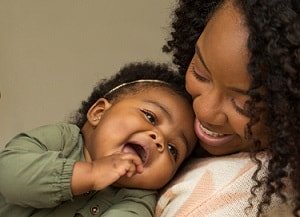
As noted above, nurturing touch appears to protect babies from harmful stress, and researchers think they know why. Affectionate contact triggers the release of several stress-busting chemicals in the brain, including oxytocin (the so-called “love hormone”) and endogenous opioids (natural painkillers).
These have a calming effect, and help switch off the production of cortisol. As a result, there is less physiological wear-and-tear on the body, and the brain is more likely to develop a long-term pattern of resilience to stress.
So physical affection is an excellent stress-buster. But keep in mind: Sometimes, babies respond negatively to touch. They might find it irritating, creepy, or overwhelming.
For instance, experiments suggest that many young babies don’t like the sensation of a light caress (Kida and Shinohara 2013). They seem to prefer a more firm sort of touch.
Babies may also find it stressful to be touched in isolation, outside the context of a friendly, multi-sensory interaction.
In experiments on newborns, infants showed a drop in cortisol levels when they were stroked by a caregiver who rocked them, made eye contact, and spoke soothingly. But when they were stroked in silence — without rocking or eye contact — these babies experienced a cortisol surge (White-Traut et al 2009).
So we should adapt our approach to the preferences of the baby, and sometimes that means backing off altogether. Occasionally babies feel over-stimulated and need to withdraw, and we can cause stress if we don’t respect their wishes.
In one study, researchers watched mothers and infants as they played together, and noted whether or not mothers heeded their babies’ signals about being touched. Babies who received unwanted stimulation had higher cortisol levels (Feldman et al 2010).
2. Know that the early months are especially difficult, and take care of yourself.
Young babies often experience surges in cortisol when they encounter something that is physically aversive. This includes anything that’s painful, of course, like a blood draw or innoculation. But it can also include certain forms of handling, like being bathed, or examined by a doctor. As noted above, some newborns have experienced heightened stress hormones in response to silent, socially disengaged stroking.
Not terribly surprising, perhaps. But here’s the interesting part: This cortisol reactivity to mild physical stressors tends to decrease as babies get older. For example, some studies report that babies 4 months and older no longer experienced a spike in cortisol in response to a routine physical exam (Jansen et al 2010).
Why does this happen? Maybe babies are getting used to these experiences, so they seem less threatening. But Megan Gunnar, a world expert in infant stress reactivity, thinks something more is going on: Older babies have developed the ability to regulate themselves by tuning into the presence and soothing behavior of attachment figures (Gunnar 2017). In effect, older babies have learned how to take comfort from social support.
Understanding this won’t stop your young infant from experiencing surges of cortisol. But you can be reassured that your baby is in the process of developing more mature self-regulation abilities, and your sensitive, loving care is an important part of that process.
Meanwhile, we need to respect how difficult these early months can be.
In addition to the cortisol surges, families have to cope with sleep disruption. And, as I note elsewhere, some babies experience frequent, unexplained bouts of inconsolable, excessive crying (also known as “infantile colic”). These conditions put parents at high risk for mood problems, depression, and anxiety. In addition, excessive crying can sometimes trigger stressed-out, frustrated parents to shake their babies, which can cause serious injuries.
So you need to protect your mental health, and prioritize safety. If your baby seems stressed-out, don’t take it personally. Talk to your doctor, and seek out social support. Above all, don’t handle a distressed, crying infant when you are feeling unsafe or ready to snap. Recognize when you need a “time out,” and give yourself the chance to calm down. This, too, is part of what it means to be a sensitive caregiver.
3. Think like a baby.
It’s not easy to get inside your baby’s head, to see things from an infant’s perspective. When is the last time you found yourself vulnerable, dependent, immobilized, and unable to communicate with language?

But the better you understand your baby’s feelings, the better your chances of minimizing stress.
For example, take bath time. Do you prepare everything first, and then undress the baby just before putting him in the water? Or do you undress the baby first, and make him wait for his bath? Amie Hane and Lauren Philbrook (2012) note what might go wrong in the latter case.
Suppose the parent tries to hold the baby in one arm while she readies the bath with the other. And suppose that the naked, waiting baby gets cold.
Now the baby cries and squirms, making it hard for his mother to hold onto him. When the water is finally ready, the struggling mother releases the baby awkwardly, plunking him in the water more abruptly than she intended.
The water feels particularly warm against the baby’s skin, and he screams in outrage.
In this way, a single misstep – allowing the baby to get cold– can lead to a lot of unnecessary strife for everyone. And, say Hane and Philbrook, little episodes like this might push families in the wrong direction.
Because the baby seems so temperamental and intolerant of change, the parent decides to handle these situations by becoming more brusque and controlling. It’s going to be miserable, so why not get it over with quickly?
But forcing the matter ensures that the encounter will be stressful, and creates a vicious circle of bad feelings–one calculated to turn childcare into a series of conflicts.
Perhaps, then, we can avert a whole cascade of negative effects by figuring out what sets our babies off, and changing our tactics. If your baby’s irritation has you stumped, try asking an experienced helper for advice. You might be too stressed to see things objectively.
And take heart: Making the effort to understand your baby’s point of view may lead to many benefits. Studies suggest that parents who tune in end up with stronger attachment relationships — and with babies who develop better social skills. Read more about it in my article on “mind-minded parenting.”
4. Don’t underestimate your baby’s ability to read — and mirror — your negative emotions.
Can babies tell when their parents are stressed? Are they affected by our emotions? Family tensions? When you’re distracted, upset, or depressed, you might think your baby doesn’t notice. But research suggests otherwise. Studies show that babies – even newborns — get distressed when their caregivers become emotionally unresponsive (Yoo and Reeb-Sutherland 2013). And by 6 months, many babies can distinguish between happy and angry body language (Zeiber et al 2013).
So babies are sensitive to our emotional cues. What’s more, babies can sense when we’re stressed-out — and this tends to make them feel stressed-out too (e.g., Waters et al 2014; Waters et al 2017). There’s even evidence that babies are affected by witnessing third party conflicts. They can tell when parents are bickering or fighting with each other — and these experiences may put babies at higher risk for developing abnormal stress response systems.
If you want to learn more about these fascinating and important discoveries, I recommend these Parenting Science articles:
- “Can babies sense your stress?”
- “Do babies feel empathy?”
- “Can babies tell when parents are fighting?”
But here, the takeaway lesson is that your own moods can affect your baby. Thus, managing your own stress – by seeking social support or other remedies – could make an important difference to your baby’s behavior and well-being. For a guide to evidence-based coping strategies, see my tips for coping with parenting stress. And if you think you might be suffering from postpartum depression, check out my article, “Postpartum depression symtoms: When is it more than the ‘baby blues’?”
5. Engage your baby in one-on-one communication, but don’t force it.
Like physical affection, friendly talk and sympathetic body language can trigger our brains to release “feel good” chemicals, like oxytocin.
Moreover, studies reveal that babies benefit when we treat them as conversation partners–acknowledging their feelings, responding to their implied questions, and offering them support when they are distressed. Not only do these tactics teach babies cope with their negative emotions, they may also help babies develop secure, healthy attachment relationships.
But once again, we need to be careful about the context. Just as babies can become stressed by physical touch, they can be overwhelmed by face-to-face communication.
If your face is too close, or your baby has simply had enough “conversation,” she will let you know. She may duck or put her hands over her face. She may try to turn her head and look away (Beebe et al 2010).
6. Crying? Fussing? Calm that baby with a walk.

It’s old wisdom supported by modern science: Babies like to be carried around, and seem to find it more soothing than being held by a person who doesn’t move.
In a series of experiments, researchers found that infants experienced slower heart rates, reduced body movement, and reduced crying when they were held by an adult who was walking from place to place (Esposito et al 2013; Ohmura et al 2022). Read more about it in my article, “How to soothe a crying baby to sleep.” For additional help with crying, fussy babies, see this Parenting Science guide.
7. Make yourself emotionally available at bedtime.

For most of human history, our ancestors slept close to their babies, and an infant’s survival depended on staying near. So it shouldn’t surprise us that babies find it stressful to be left alone in the dark.
Indeed, there is evidence that babies experience elevated cortisol levels in this situation – even if they have been “trained” to sleep in their own rooms, and remain relatively quiet (Middlemiss et al 2011).
But our nighttime sleeping arrangements don’t just affect the stress babies feel at night. They also may affect how babies handle stress at other times.
For instance, when researchers subjected 12-month-old babies to a social stressor – the so-called “strange situation” – they found that infants varied depending on their personal histories. Babies who had spent more weeks “rooming in” with their parents experienced less cortisol reactivity, even after controlling for other factors, like parental sensitivity and attachment security (Beijers et al 2013).
Another study reports that 5-week-old infants with a history of co-sleeping showed evidence of greater calm. While co-sleeping history had no apparent effect on the babies’ responses to a painful vaccination, it was linked with less cortisol reactivity during bath time (Tollenaar et al 2012).
So being physically close at night may help babies regulate their stress responses throughout the day. But physical proximity isn’t the whole story. Some researchers argue that the crucial ingredient is “emotional availability at bedtime.”
What exactly does this phrase mean? Researchers consider you to be “emotionally available” if you do the following:
- Use quiet, soothing routines to help your baby fall asleep at night.
- Avoid initiating social interactions with your baby when he or she is falling asleep.
- Maintain a manner that is free of irritation and hostility.
- Respond promptly (within a minute) when your baby cries out in distress.
When Lauren Philbrook and her colleagues observed the normal nighttime routines of families with young babies, they found that mothers who were rated as highly “emotionally available” were more likely to have babies with low nighttime cortisol levels.
In addition, these babies were also more likely to develop normal, healthy patterns of hormonal change over the 24-hour day (Philbrook et al 2014).
And in case you’re wondering, emotional availability at bedtime appears to help babies sleep longer during the night (Philbrook and Teti 2016; Jian and Teti 2016). Sounds like a good deal all around!
More reading about stress in babies and children
To read more about the effects of parenting on a child’s developing stress response system, see these Parenting Science articles:
- The health benefits of sensitive, responsive parenting
- Secure attachment relationships protect kids from toxic stress
- Oxytocin affects social bonds and our responses to toxic stress. Can we influence oxytocin in children?
For a discussion of cultural biases against taking babies’ distress seriously, see my blog post, “Babies can’t remember is bunk.”
Are you coping with a baby who cries excessively? If so, check out this Parenting Science article. And if you are looking for help with nighttime parenting, my evidence-based baby sleep tips, and this article for understanding and trouble-shooting infant sleep problems.
References: Stress in babies
Albers EM, Riksen-Walraven JM, Sweep FC, and de Weerth C. 2008. Maternal behavior predicts infant cortisol recovery from a mild everyday stressor. J Child Psychol Psychiatry 49(1):97-103.
Asok A, Bernard K, Roth TL, Rosen JB, and Dozier M. 2013. Parental responsiveness moderates the association between early-life stress and reduced telomere length. Dev Psychopathol. 25(3):577-85.
Beatrice Beebe, Joseph Jaffe, Sara Markese, Karen Buck, Henian Chen, et al. 2010. The Origins of 12-Month Attachment: A Microanalysis of 4-Month Mother-Infant Interaction. Attach Hum Dev. 12(0): 3–141.
Beijers R, Riksen-Walraven JM, and de Weerth C. 2013. Cortisol regulation in 12-month-old human infants: associations with the infants’ early history of breastfeeding and co-sleeping. Stress 16(3):267-77.
Blair C, Granger D, Willoughby M, Kivlighan K. 2006. Maternal sensitivity is related to hypothalamic-pituitary-adrenal axis stress reactivity and regulation in response to emotion challenge in 6-month-old infants. Ann N Y Acad Sci. 1094:263-7.
Esposito G, Yoshida S, Ohnishi R, Tsuneoka Y, Rostagno Mdel C, Yokota S, Okabe S, Kamiya K, Hoshino M, Shimizu M, Venuti P, Kikusui T, Kato T, Kuroda KO. 2013. Infant calming responses during maternal carrying in humans and mice. Current Biology 23(9):739-45.
Feldman R, Singer M, and Zagoory O. 2010. Touch attenuates infants’ physiological reactivity to stress. Dev Sci. 13(2):271-8.
Feldman R, Rosenthal Z, and Eidelman AI. 2013. Maternal-Preterm Skin-to-Skin Contact Enhances Child Physiologic Organization and Cognitive Control Across the First 10 Years of Life. Biol Psychiatry. 2013 Oct 3. doi:pii: S0006-3223(13)00764-6. 10.1016/j.biopsych.2013.08.012. [Epub ahead of print]
Graham AM, Fisher PA, and Pfeifer JH. 2012. What sleeping babies hear: a functional MRI study of interparental conflict and infants’ emotion processing. Psychological Science 24(5):782-789.
Gray L, Watt L, Blass EM. Skin-to-skin contact is analgesic in healthy newborns. Pediatrics 105(1): e14.
Gunnar MR. 2017. Social Buffering of Stress in Development: A Career Perspective. Perspect Psychol Sci. 12(3):355-373.
Hane AA and Philbrook LE. 2012. Beyond licking and grooming: Maternal regulation of infant stress in the context of routine care. Parenting: Science and Practice 12:2-3, 144-153.
Jansen J, Beijers R, Riksen-Walraven M, de Weerth C. 2010. Cortisol reactivity in young infants. Psychoneuroendocrinology. 35(3):329-38.
Jian N and Teti DM. 2016. Emotional availability at bedtime, infant temperament, and infant sleep development from one to six months. Sleep Med. 23:49-58.
Kida T and Shinohara K. 2013. Gentle touch activates the prefrontal cortex in infancy: an NIRS study. Neurosci Lett. 541:63-6.
Kojima S, Stewart RA, Demas GE, and Alberts JR. 2012. Maternal contact differentially modulates central and peripheral oxytocin in rat pups during a brief regime of mother-pup interaction that induces a filial huddling preference. J Neuroendocrinol. 24(5):831-40.
Luby J, Belden A, Botteron K, Marrus N, Harms MP, Babb C, Nishino T, and Barch D. 2013. The Effects of Poverty on Childhood Brain Development: The Mediating Effect of Caregiving and Stressful Life Events. JAMA Pediatr. 167(12):1135-42
Mesman J, IJzendoorn MH van, and Bakermans-Kranenburg MJ. 2009. The many faces of the still-face paradigm: A review and meta-analysis. Developmental Review 29: 120-162.
Mezzacappa ES and Katlin ES. 2002. Breast-feeding is associated with reduced perceived stress and negative mood in mothers. Health Psychology 21(2):187-93.
Middlemiss W, Granger DA, Goldberg WA, Nathans L. 2011. Asynchrony of mother-infant hypothalamic-pituitary-adrenal axis activity following extinction of infant crying responses induced during the transition to sleep. Early Hum Dev. 88(4):227-32.
Moore GA. 2009. Infants’ and mothers’ vagal reactivity in response to anger. J Child Psychol Psychiatry 50(11):1392-400.
Mörelius E, Hellström-Westas L, Carlén C, Norman E, and Nelson N. 2006. Is a nappy change stressful to neonates? Early Hum Dev. 82(10):669-76.
Ohmura N, Okuma L, Truzzi A, Shinozuka K, Saito A, Yokota S, Bizzego A, Miyazawa E, Shimizu M, Esposito G, Kuroda KO. 2022. A method to soothe and promote sleep in crying infants utilizing the transport response. Current Biology S0960-9822(22)01363-X.
Philbrook LE, Hozella AC, Kim BR, Jian N, Shimizu M, Teti DM. 2014. Maternal emotional availability at bedtime and infant cortisol at 1 and 3 months. Early Hum Dev. 90(10):595-605.
Philbrook LE and Teti DM. 2016. Bidirectional associations between bedtime parenting and infant sleep: Parenting quality, parenting practices, and their interaction. J Fam Psychol. 30(4):431-41.
Pluess M and Belsky J. 2010. Differential susceptibility to parenting and quality child care. Dev Psychol. 46(2):379-90.
Meaney MJ. 2001. Maternal care, gene expression, and the transmission of individual differences in stress reactivity across generations. Annu Rev Neurosci. 24:1161-92. –
Quirin M, Kuhl J, and Düsing R. 2011. Oxytocin buffers cortisol responses to stress in individuals with impaired emotion regulation abilities. Psychoneuroendocrinology 36(6):898-904
Roth TL and Sullivan RM. 2006. Examining the role of endogenous opioids in learned odor-stroke associations in infant rats. Dev Psychobiol. 48(1):71-8.
Sanchez MM, McCormack KM, Howell BR. 2015. Social buffering of stress responses in nonhuman primates: Maternal regulation of the development of emotional regulatory brain circuits. Soc Neurosci. 10(5):512-26.
Shah PS, Torgalkar R, Shah VS. 2023. Breastfeeding or breast milk for procedural pain in neonates. Cochrane Database Syst Rev. 8(8):CD004950.
Sharp H, Pickles A, Meaney M, Marshall K, Tibu F, and Hill J. 2012. Frequency of Infant Stroking Reported by Mothers Moderates the Effect of Prenatal Depression on Infant Behavioural and Physiological Outcomes. PLoS ONE 7(10): e45446.
Sharp H, Hill J, Hellier J, NS Pickles A. 2015. Maternal antenatal anxiety, postnatal stroking and emotional problems in children: outcomes predicted from pre- and postnatal programming hypotheses. Psychol Med. 28:1-15.
Stock S and Uvnäs-Moberg K. 1998. Increased plasma levels of oxytocin in response to afferent electrical stimulation of the sciatic and vagal nerves and in response to touch and pinch in anaesthetized rats. Acta Physiol Scand.132(1):29-34.
Stright AD, Gallagher KC, and Kelley K. 2008. Infant temperament moderates relations between maternal parenting in early childhood and children’s adjustment in first grade. Child Dev. 79(1):186-200.
Thomas JC, Letourneau N, Campbell TS, Giesbrecht GF; Apron Study Team. 2018. Social buffering of the maternal and infant HPA axes: Mediation and moderation in the intergenerational transmission of adverse childhood experiences. Dev Psychopathol. 30(3):921-939.
Todeschin AS, Winkelmann-Duarte EC, Jacob MH, Aranda BC, Jacobs S, Fernandes MC, Ribeiro MF, Sanvitto GL, and Lucion AB. 2009. Effects of neonatal handling on social memory, social interaction, and number of oxytocin and vasopressin neurons in rats. Horm Behav. 2009 Mar 24. [Epub ahead of print]
Tollenaar MS, Beijers R, Jansen J, Riksen-Walraven JM, and de Weerth C. 2012. Solitary sleeping in young infants is associated with heightened cortisol reactivity to a bathing session but not to a vaccination. Psychoneuroendocrinology. 37(2):167-77.
Towe-Goodman NR, Stifter CA, Mills-Koonce WR, Granger DA and Family Life Project Key Investigators. 2012. Interparental aggression and infant patterns of adrenocortical and behavioral stress responses. Dev Psychobiol. 54(7):685-99.
Tu MT, Lupien SJ, and Walker CD. 2006. Multiparity reveals the blunting effect of breastfeeding on physiological reactivity to psychological stress. J Neuroendocrinol. 18(7):494-503.
Underdown A, Barlow J, Chung V, and Stewart-Brown S. 2006. Massage intervention for promoting mental and physical health in infants aged under six months. Cochrane Database Syst Rev. 18;(4):CD005038.
Waters SF, West TV, Mendes WB. 2014. Stress contagion: physiological covariation between mothers and infants. Psychol Sci. 25(4):934-42.
Waters SF, West TV, Karnilowicz HR, Mendes WB. 2017. Affect contagion between mothers and infants: Examining valence and touch. J Exp Psychol Gen. 146(7):1043-1051.
Weller A and Feldman R. 2003. Emotion regulation and touch in infants: the role of cholecystokinin and opioids. Peptides 24(5):779-88.
White-Traut RC, Schwertz D, McFarlin B, and Kogan J. 2009. Salivary cortisol and behavioral state responses of healthy newborn infants to tactile-only and multisensory interventions. J Obstet Gynecol Neonatal Nurs. 38(1):22-34.
Yoo K and Reeb-Sutherland BC. 2013. Effects of negative temperament on 5-month-old infants’ behavior during the still-face paradigm. Infant Behav Dev. 36(3):344-8.
Zieber N, Kangas A, Hock A, and Bhatt RS. 2010. Infants’ Perception of Emotion From Body Movements. Child Dev. 85(2):675-84.
Zijlmans MA, Riksen-Walraven JM, de Weerth C. 2015. Associations between maternal prenatal cortisol concentrations and child outcomes: a systematic review. Neurosci Biobehav Rev. 53:1–24.
Zotter H, Urlesberger B, Pichler G, Mueller W, and Kerbl R. 2007. Do wet diapers induce arousals in sleeping infants? Acta Paediatr. 96(3):452-3.
Content of “Stress in Babies” last modified 10/2023
Portions of the text are derived from earlier versions of this article, written by the same author.
Image credits for “Stress in babies”:
Image of mother snuggling baby girl by digitalskillet / istock
Image of father with baby at bathtime by halfpoint / istock
image of mother carrying baby by Kritchanut / istock
Image of mother reading to baby at night by evgenyatamanenko / istock